For research use only
Healing & Recovery / Tissue Repair
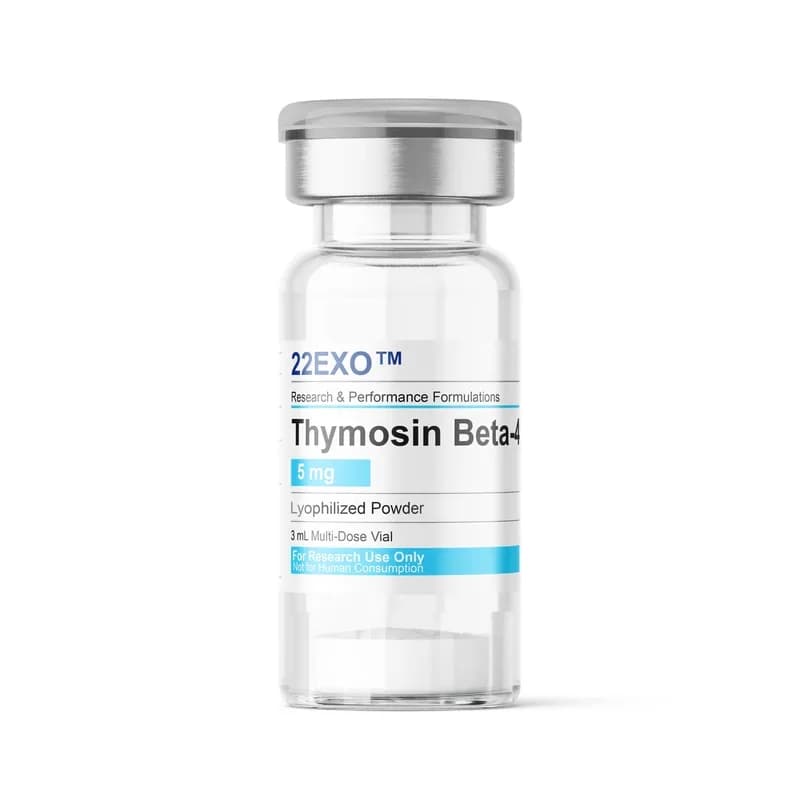
Thymosin Beta-4 (TB-500) 5mg
Research gradeSynthetic Thymosin Beta-4: the 43-amino acid actin-sequestering peptide naturally elevated after injury, providing systemic wound healing, angiogenesis, and cardiac repair signals.
- ≥98% purity
- Third-party COA on file View details
- Cold packs when needed
Order options
In stock
Save 30%You save $20.41 per vial
Free 2-Day Air at $200.00+ after discounts to eligible US street addresses. Two business days in transit after dispatch. Shipping details · Discreet packaging
Ordering for an institution? Volume pricing and purchase orders are available. Wholesale program → · Contact support
| 1 vial | $47.59 | |
| 2 vials | $45.21 | Save 5% |
| 3 vials | $42.83 | Save 10% |
| 4 vials | $40.45 | Save 15% |
| 5–9 vials | $38.07 | Save 20% |
| 10+ vials | $35.69 | Save 25% |
Tiers apply to the quantity on each cart line; a Subscribe & Save line is priced separately from a one-time line.
Product details & certificate of analysis
Overview
TB-500 is the synthetic form of the naturally occurring peptide Thymosin Beta-4 (Tβ4), a 43-amino-acid protein first isolated from bovine thymus gland. Tβ4 is one of the most abundant intracellular peptides in mammalian cells and is found at especially high concentrations in platelets, white blood cells, and wound fluid: indicating a fundamental role in the body's endogenous repair response. TB-500 refers specifically to the active fragment Ac-SDKP derived from the Tβ4 sequence, though commercial preparations typically contain the full-length synthetic peptide. It is widely studied for its roles in actin cytoskeleton regulation, angiogenesis, and systemic wound healing, and has been detected at elevated levels following tissue injury across species.
- Purity
- ≥98%
- Strength
- 5mg
- CAS
- 77591-33-4
- Formula
- C212H350N56O78S
- Form
- Lyophilized Powder
- Vial
- 3 mL Multi-Dose Vial
Sequence: Ac-Ser-Asp-Lys-Pro-Asp-Met-Ala-Glu-Ile-Glu-Lys-Phe-Asp-Lys-Ser-Lys-Leu-Lys-Lys-Thr-Glu-Thr-Gln-Glu-Lys-Asn-Pro-Leu-Pro-Ser-Lys-Glu-Thr-Ile-Glu-Gln-Glu-Lys-Gln-Ala-Gly-Glu-Ser
Certificate of analysis
Download certificate of analysis (PDF)Research context
Mechanism
TB-500's primary molecular mechanism involves sequestration of globular actin (G-actin) through its WH2 domain, preventing actin polymerization and modulating cytoskeletal dynamics. This G-actin buffering function regulates cell migration, a critical step in wound healing. Beyond cytoskeletal effects, TB-500 upregulates VEGF expression and receptor activity, promoting robust angiogenesis and vasculogenesis at injury sites. It activates AP-1 transcription factor signaling and promotes stem cell homing through CXCR4/SDF-1α interactions. Research demonstrates TB-500 promotes cardiac progenitor cell differentiation in myocardial injury models. Its systemic distribution (unlike most repair peptides) allows it to act on injury sites remote from its administration point: a pharmacologically unusual and clinically significant property.
Published research
- 1Significant reduction in myocardial infarct size and improved cardiac function with stem cell activation in rat MI models (Smart et al., 2007)
- 2Accelerated wound healing with enhanced angiogenesis, keratinocyte migration, and collagen deposition in full-thickness excisional wound models (Malinda et al., 1999)
- 3Promotion of neuronal cell survival and axonal regrowth in spinal cord injury models with improved functional outcomes (Santra et al., 2012)
- 4Corneal wound healing acceleration with complete epithelial recovery at 24 hours versus 48 hours in controls following chemical injury (Sosne et al., 2002)
- 5Systemic distribution from subcutaneous injection site reaching remote injury locations: demonstrated in compartmentalized wound models (Ho et al., 2007)
Methodology note: This product summary references published preclinical and clinical research. 22EXO does not make therapeutic claims. All compounds are sold strictly for laboratory and research applications.
Disclaimer: For in-vitro laboratory research use only. Not for human or veterinary use. By purchasing, you agree to our terms of service and confirm that this product will only be used for legitimate research purposes.
Related research
All articlesPeptide vs Protein vs Polypeptide: Key Differences
Compare the terminology used for peptides, polypeptides and proteins, including amino-acid chains, structural differences and the limits of common length cutoffs.
10 min readResearch GuidesPeptides Near Me: Where Research Labs Source Peptides in Major U.S. Metros
When a lab technician types 'peptides near me,' they are almost certainly asking the wrong question. Here is how research institutions across the ten largest U.S. metros actually source RUO peptides, and why geography matters less than cold-chain logistics.
10 min readResearch GuidesAre Research Peptides Legal in the U.S.? RUO and FDA
Research peptides occupy a defined but frequently misunderstood legal category in the U.S. The answer depends on which law applies, what the peptide is, who is buying it, and what it is labeled for.
10 min readResearch GuidesBacteriostatic Water for Peptides: Laboratory Sourcing Guide
A laboratory sourcing guide to bacteriostatic water, 0.9% benzyl alcohol, label checks and solvent compatibility. Product documentation and the experimental method determine appropriate handling.
8 min readResearch GuidesHow to Reconstitute Peptides: Step-by-Step Lab Protocol
Lyophilized peptides arrive as dry powder or cake. Research-chemical reconstitution requires the right solvent, the slow-stream technique, and concentration math to keep a research solution intact.
9 min readHealing & RecoveryThymosin Beta-4 and the Actin Pool: What TB-500 Actually Does at the Cellular Level
TB-500 is a fragment of thymosin beta-4, a 43-residue protein whose primary cellular role is sequestering G-actin monomers. The mechanism is unusual, the literature is dense, and the therapeutic implications are still being worked out.
10 min readComplementary compounds
Handling & storage
Handling & storage
Store lyophilized powder at −20°C, protected from light. Reconstitute with bacteriostatic water. Reconstituted solution stable at 2–8°C for up to 28 days. TB-500 is a moderately stable peptide: avoid extreme pH conditions. Lyophilized form retains potency for 24+ months at −20°C.
Reconstitution: Add bacteriostatic water slowly along the vial wall. Gently swirl until dissolved.
Contents: 5mg lyophilized powder in a 3 ml multi-dose vial with mannitol excipient.
What arrives
- 3 mL Multi-Dose Vial glass vial with lyophilized powder
- Crimp-sealed cap with tamper-evident seal
- Third-party certificate of analysis (download it above)
- Insulated packaging, with a cold pack when weather or transit time warrant it
- Discreet shipping, no product names on the exterior
Customer reviews
No reviews yet for Thymosin Beta-4 (TB-500) 5mg.
Bought it? Be the first to share how it arrived: packaging, documentation, solubility. Reviews from purchasers are marked Verified Buyer.
Curated research companions
Choose any catalog items you want to add alongside Thymosin Beta-4 (TB-500) 5mg.
Total for 3 items: $151.08