BPC-157 vs. TB-500: What the Research Actually Shows About Each Peptide
BPC-157 and TB-500 are frequently compared and often stacked — but their mechanisms are genuinely distinct. A research-grounded breakdown of what the published data actually shows for each peptide.
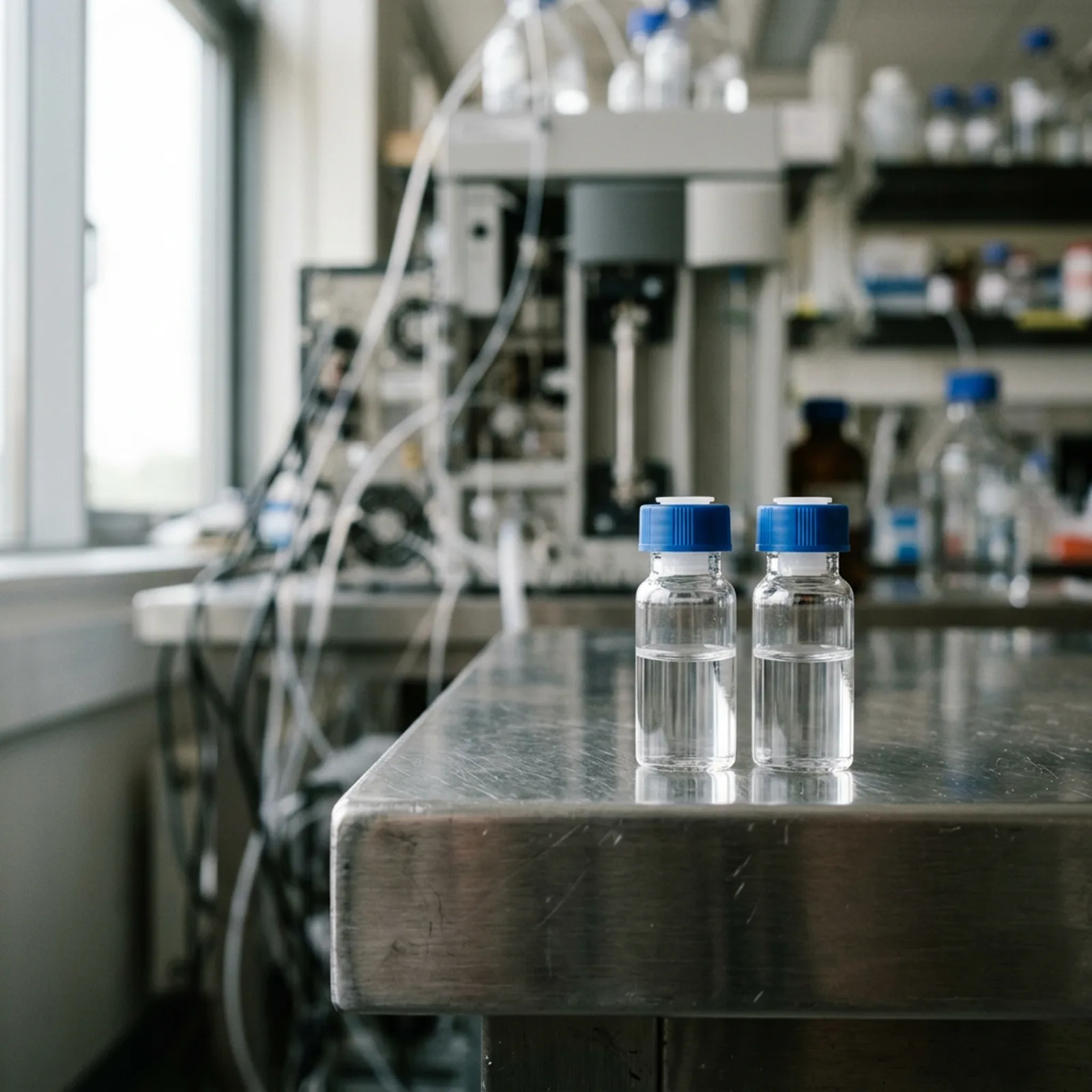
Two peptides dominate the healing and recovery conversation more than almost anything else in the research space: BPC-157 and TB-500. They get compared constantly, often stacked together, and — if you spend any time reading forums or product pages — frequently conflated as if they do the same thing. They don't. The mechanisms are genuinely distinct, and understanding those distinctions matters if you're trying to make sense of what the published literature actually shows.
This isn't a breakdown of anecdote. We're going to stay close to the peer-reviewed data, name the researchers, and let the results speak.
BPC-157: What It Is and Where It Comes From
BPC-157 — formally, Body Protection Compound 157 — is a synthetic pentadecapeptide, meaning it's a chain of 15 amino acids (sequence: GEPPPGKPADDAGLV, molecular weight 1,419 Da). It was isolated from human gastric juice, which is a slightly strange origin story. The stomach produces it endogenously, apparently as part of a mucosal protective mechanism, and researchers — particularly Predrag Sikiric's group at the University of Zagreb — have spent decades documenting its effects across animal models.
What makes BPC-157 unusual is how broad its tissue effects appear to be. Tendon, ligament, muscle, gut, bone, and neural tissue have all been studied. It's also been through Phase II clinical trials in Croatia for inflammatory bowel disease (under the designations PLD-116 and PL 14736), which gives it a regulatory paper trail that most research peptides lack entirely.
TB-500: Thymosin Beta-4 in Synthetic Form
TB-500 is a synthetic analog of thymosin beta-4 (Tβ4), a 43-amino-acid peptide found in virtually every cell in the body — with particularly high concentrations in blood platelets and wound fluid. Thymosin beta-4 was identified by Allan Goldstein's group at the National Cancer Institute in the 1960s as part of a broader investigation into thymic hormones. The name stuck even as researchers clarified it wasn't actually thymically derived.
The key functional fragment of thymosin beta-4 is a seven-amino-acid actin-binding sequence (LKKTETQ). That sequence — and how it interacts with G-actin — underpins most of what TB-500 does biologically.
The Mechanism Divide: Two Very Different Approaches to the Same Problem
How BPC-157 Works
BPC-157's mechanism isn't fully mapped, and anyone who tells you otherwise is oversimplifying. What the research does show is a multi-pathway picture. One major thread is its relationship with the nitric oxide (NO) system. Sikiric's group — in a comprehensive review published in Current Pharmaceutical Design (2014) — detailed how BPC-157 modulates NO synthesis, competing effectively with both L-NAME (an NOS blocker) and L-arginine, suggesting it acts as a regulator rather than a simple agonist or antagonist. That has implications for vascular integrity and blood flow to injured tissue.
But the more granular cellular work came from Chang and colleagues at Taipei Medical University. Their 2011 paper in the Journal of Applied Physiology is one of the most cited BPC-157 studies for a reason. Working with rat Achilles tendon fibroblasts, Chang's group showed that BPC-157 at 2 μg/ml increased in vitro cell migration 2.3-fold over controls. More interestingly, it induced F-actin formation — detectable by FITC-phalloidin staining — and dose-dependently increased phosphorylation of FAK (focal adhesion kinase) and paxillin without changing total protein levels.
Here's where it gets interesting: FAK-paxillin signaling is a core mechanosensing pathway. When cells are migrating toward a wound site, they need to reorganize their cytoskeleton rapidly. BPC-157 appears to facilitate exactly that. The same study showed BPC-157 significantly increased tendon explant outgrowth — with treated explants outpacing controls by day 2, and all treated explants showing outgrowth by day 5. Cell survival under oxidative stress (H2O2 challenge) was also meaningfully improved.
The angiogenic dimension is documented separately. In vascular injury models, BPC-157 consistently promotes new blood vessel formation — not through a single receptor, but through multiple convergent pathways including VEGF upregulation. This matters because tendons and ligaments are famously poorly vascularized tissues. Healing them requires getting blood supply to places that don't naturally have much.
How TB-500 Works
TB-500's mechanism is more structurally precise, at least at the molecular level. Thymosin beta-4 sequesters G-actin — the globular, monomeric form of actin — preventing it from polymerizing into F-actin filaments. That might sound like it inhibits tissue repair, but the effect is the opposite: by maintaining a pool of mobile, unpolymerized actin, Tβ4 enables cells to rapidly reorganize their cytoskeleton in response to injury signals. It's about mobility and directed migration.
Malinda and colleagues at the National Institutes of Health published the landmark wound healing data in the Journal of Investigative Dermatology (1999). In a rat full-thickness wound model, topical or intraperitoneal thymosin beta-4 increased reepithelialization by 42% over saline controls at day 4, and by up to 61% at day 7. Wound contraction was at least 11% greater than controls by day 7. Keratinocyte migration in a Boyden chamber assay was stimulated 2-3-fold after just 4-5 hours — with as little as 10 picograms of Tβ4 producing a detectable effect.
Increased collagen deposition and angiogenesis were also documented in treated wounds. TB-500 isn't purely a migration molecule — it influences the entire repair cascade, including new blood vessel formation and structural matrix remodeling.
Tendon-Specific Data: Head to Head
The Staresinic et al. study published in the Journal of Orthopaedic Research (2003) is the most direct head-to-head data point for BPC-157 in a surgically relevant injury model. Rats had their right Achilles tendon transected 5 mm proximal to the calcaneal insertion — a model that produces a large, functionally significant defect between cut ends. BPC-157 was administered intraperitoneally at doses of 10 μg, 10 ng, or 10 pg per kilogram, once daily beginning 30 minutes post-surgery.
Control animals showed severely compromised healing across all assessment timepoints (days 1, 4, 7, 10, and 14). BPC-157-treated animals showed: improved biomechanical parameters (increased load of failure, load of failure per area, and Young's modulus of elasticity); significantly higher Achilles Functional Index scores; superior histological features including more mononuclear cells, less granulocyte infiltration, and better fibroblast, reticulin, and collagen formation; and macroscopic restoration of tendon integrity. That's a remarkably complete picture for a single peptide in a single injury model.
TB-500's tendon data is less comprehensive in surgical transection models, but the actin-sequestration mechanism logically extends to connective tissue. Phase II clinical data for thymosin beta-4 in wound healing has been published for chronic wounds, and preclinical data in musculoskeletal applications continues to accumulate.
Are They Doing the Same Thing?
Not quite — and this is worth sitting with. Both peptides promote tissue repair. Both have angiogenic effects. Both influence cell migration. But their primary molecular entry points differ. BPC-157 targets FAK-paxillin signaling, the NO system, and growth factor expression. TB-500's primary action is actin sequestration and the downstream effects on cytoskeletal mobility and directed cell movement.
We found this particularly interesting when looking at the F-actin data. Chang's 2011 paper showed BPC-157 induces F-actin formation — it promotes actin polymerization in tendon fibroblasts. TB-500, by contrast, works by preventing actin polymerization, maintaining the mobile G-actin pool. These are, in a very real sense, opposite ends of the actin dynamics spectrum. Yet both produce pro-healing outcomes. The biology is more nuanced than a simple summary suggests.
The Stacking Rationale
The complementary mechanisms — rather than redundant ones — are precisely why the BPC-157 + TB-500 combination is so commonly examined. If BPC-157 promotes vascular recruitment, fibroblast activation, and NO-mediated tissue protection, while TB-500 ensures the cellular migration machinery is primed via actin dynamics, the two are addressing different rate-limiting steps in the same repair process.
Think of it this way: TB-500 helps injured cells move toward the repair site; BPC-157 helps them survive, proliferate, and function once they get there. The overlap in angiogenic effects may actually reinforce rather than cancel — both peptides independently driving vascularization of poorly perfused tissue through different upstream signals.
For researchers interested in exploring this combination, 22EXO's BPC-157 5mg and TB-500 5mg are available as individual compounds, or for those working with a fixed-ratio protocol, the BPC-157 + TB-500 Blend 5mg and the BPC-157 + TB-500 + GHK-Cu Blend (which adds a copper peptide with its own collagen synthesis data) are also available. Higher-dose BPC-157 work can be explored with the BPC-157 10mg format.
What the Research Doesn't Settle
Transparency matters here. Most BPC-157 studies are in rats, not humans. The same is largely true for TB-500. The translation from animal models to human physiology is never guaranteed, and the absence of large-scale human RCTs for most peptide applications means extrapolating carefully. Thymosin beta-4 has human clinical trial data for wound healing and dry eye, but BPC-157's human data remains limited primarily to the IBD trials.
Dosing protocols in the literature vary considerably. The Staresinic study used 10 μg/kg. Chang's cell culture work used 2 μg/ml. These are not directly comparable numbers. Researchers working with these compounds need to engage with the actual protocols in the cited papers rather than relying on secondhand summaries.
The Bottom Line
BPC-157 and TB-500 are not interchangeable. They don't replace each other. The research — from Chang's FAK-paxillin mechanistic work to Malinda's wound closure data to Staresinic's tendon transection outcomes — points toward two peptides with distinct cellular targets that happen to converge on overlapping physiological goals. That convergence, rather than redundancy, is what makes the combination intellectually interesting from a research standpoint.
Understanding the difference between them isn't just academic. It shapes how you design a research protocol, what you're measuring, and what outcomes you can realistically attribute to which compound.
Frequently Asked Questions
What is the main mechanistic difference between BPC-157 and TB-500?
<a href="/product/bpc-157-5mg">BPC-157</a> primarily works through the FAK-paxillin signaling pathway, nitric oxide system modulation, and growth factor upregulation. <a href="/product/tb-500-5mg">TB-500</a> (thymosin beta-4) works by sequestering G-actin to maintain a mobile pool of actin monomers, enabling directed cell migration. Interestingly, BPC-157 induces F-actin formation while TB-500 prevents it — opposite ends of the actin dynamics spectrum that both produce pro-healing outcomes.
Is there research supporting BPC-157 for tendon repair specifically?
Yes. Staresinic et al. (J Orthop Res, 2003) showed <a href="/product/bpc-157-5mg">BPC-157</a> produced complete biomechanical recovery in rats with transected Achilles tendons — including improved load of failure, Young's modulus, and Achilles Functional Index scores. Chang et al. (J Appl Physiol, 2011) provided the mechanistic basis, showing BPC-157 increased tendon fibroblast migration 2.3-fold and enhanced cell survival under oxidative stress.
What did Malinda et al. find about thymosin beta-4 in wound healing?
In the Journal of Investigative Dermatology (1999), Malinda and colleagues showed that <a href="/product/tb-500-5mg">thymosin beta-4</a> increased wound reepithelialization by 42% over saline controls at day 4 and up to 61% at day 7 in a rat full-thickness wound model. Wound contraction was 11% greater than controls, and keratinocyte migration was stimulated 2-3-fold after just 4-5 hours, with as little as 10 picograms producing a detectable effect.
Why are BPC-157 and TB-500 often used together?
Their mechanisms are complementary rather than redundant. <a href="/product/tb-500-5mg">TB-500</a> helps cells migrate to the injury site by maintaining a mobile G-actin pool; <a href="/product/bpc-157-5mg">BPC-157</a> promotes survival, function, and vascularization once cells arrive. Both have independent angiogenic effects that may reinforce each other through different upstream pathways — making the combination logically grounded even without head-to-head stack studies.
Does BPC-157 have any human clinical trial data?
Yes, though limited. <a href="/product/bpc-157-5mg">BPC-157</a> has been through Phase II clinical trials in Croatia for inflammatory bowel disease (designated PLD-116 and PL 14736, developed by Pliva). The majority of other evidence comes from animal models, particularly rats, so extrapolation to human applications requires appropriate caution.