BPC-157 and the Gut: What the Pliva Croatian Trials Actually Tested
Before BPC-157 became a peptide-research mainstay, it spent two decades in pharmaceutical development as PLD-116 and PL 14736 — a candidate inflammatory bowel disease drug. The Phase II data is real and rarely cited correctly.
The Sequence Came From Stomach Fluid
Predrag Sikiric isn't a household name in the peptide community, but he probably should be. Working at the University of Zagreb pharmacology department through the 1990s and 2000s, Sikiric and his colleagues isolated and characterized a 15-amino-acid fragment of a protein found in human gastric juice. The fragment was unusually stable. It survived the acid environment of the stomach. And in animal models, it showed protective effects against a long list of injuries — gastric, intestinal, hepatic, vascular, even neural.
They called it BPC-157. The 15 stands for the fifteen amino acids: Gly-Glu-Pro-Pro-Pro-Gly-Lys-Pro-Ala-Asp-Asp-Ala-Gly-Leu-Val. The BPC stands for body protection compound, a name chosen for the parent protein from which the fragment was derived — a normal physiological product of human gastric mucosa.
Pliva and the IBD Program
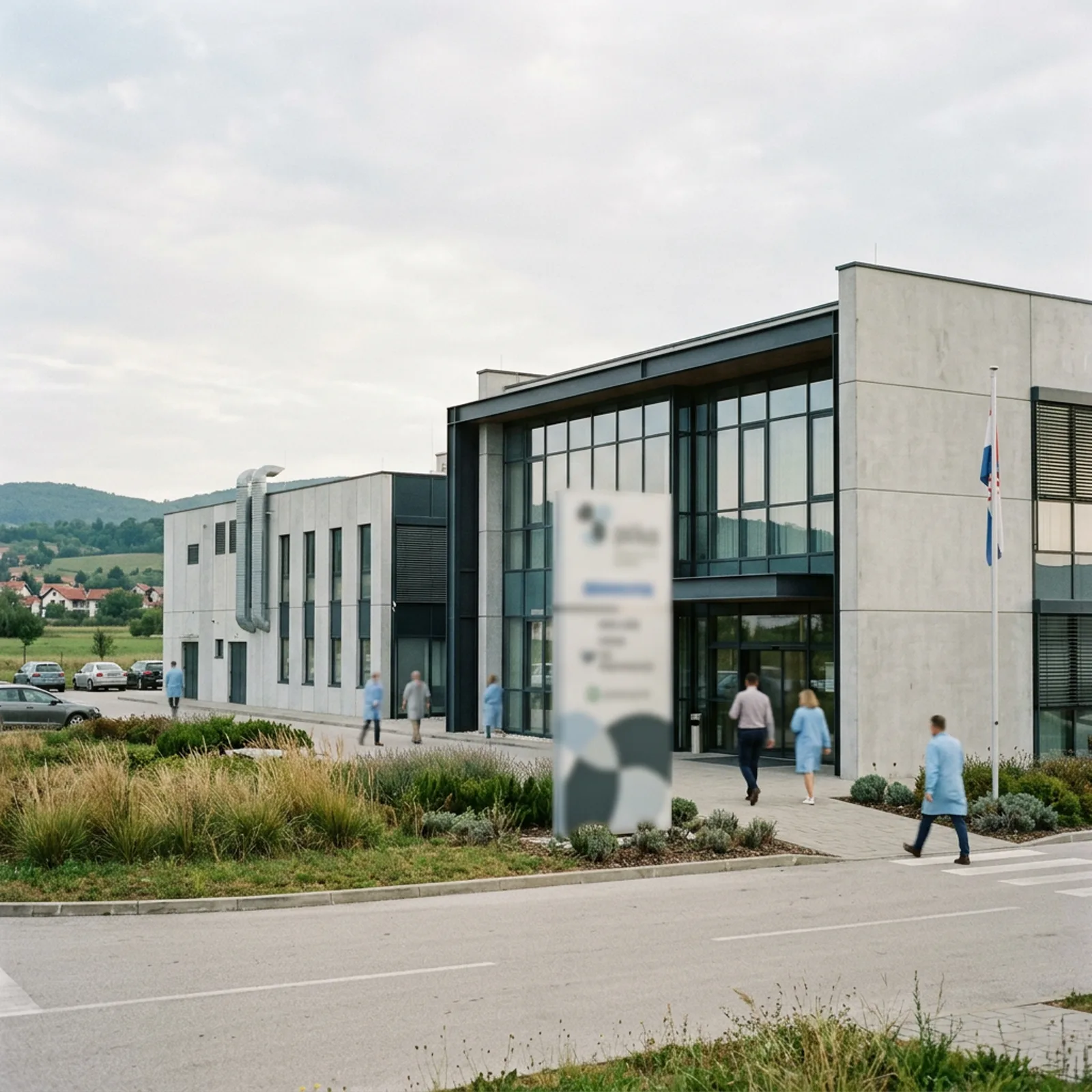
The Croatian pharmaceutical company Pliva, which has since been absorbed into Teva, picked up BPC-157 for drug development. They assigned it the internal code PLD-116, and later PL 14736 as the program advanced. The target indication was inflammatory bowel disease — primarily ulcerative colitis, with secondary work in Crohn's disease.
The Phase I work established what you'd expect from a stable peptide derived from a normal human protein: clean tolerability, no notable adverse signals, dose-finding within a wide therapeutic window. The Phase II trials in ulcerative colitis patients are where the program got more interesting. Published reports — Sikiric and colleagues in journals including Current Pharmaceutical Design and Inflammopharmacology — described improvements in endoscopic mucosal healing scores and reductions in clinical disease activity indices in the BPC-157 arms versus placebo.
The trial sizes were modest. By modern standards, the Phase II IBD trials would be considered exploratory rather than pivotal. But the signal was real enough, and the safety profile clean enough, that Pliva advanced the program. The protocol included both intragastric and parenteral administration arms, with similar efficacy patterns observed across delivery routes — a finding that helped establish BPC-157's reputation for unusual stability and tissue distribution.
The GSK Acquisition and Then the Quiet
Pliva was acquired by Barr Pharmaceuticals in 2006, which itself was acquired by Teva in 2008. Somewhere in this chain, the BPC-157 IBD development rights were licensed to GlaxoSmithKline. GSK ran some additional development work and then discontinued the program.
The reasons for discontinuation were never made fully public. In interviews and follow-up correspondence, Sikiric has consistently described the decision as commercial rather than scientific — the IBD market had moved heavily toward biologics (infliximab, adalimumab, vedolizumab) that captured the high-value patient segments and ate the development budgets that small-molecule and peptide programs would have needed to compete. A peptide drug for IBD, with the additional regulatory and manufacturing complexities peptide drugs carry, was no longer where pharma money was going.
What this means is that BPC-157 sits in an unusual category: a peptide with completed Phase I and Phase II human safety data, in published clinical reports, that never reached regulatory approval. The data is in the public record. The compound is not a drug.
Why the Animal Literature Is So Large
After the Pliva-GSK program ended, Sikiric and his Zagreb collaborators continued publishing animal studies on BPC-157 at a substantial pace. The Zagreb group's bibliography on BPC-157 now exceeds 200 papers. The studies span gastric ulcer models, intestinal anastomosis healing, tendon transection repair, ligament injuries, hepatic injury, central nervous system injury, blood vessel injury, and several others. Most are rat models. The effect sizes are typically large.
This body of work is sometimes critiqued for clustering — most of the published studies come from one research network, which raises reasonable questions about independent replication. The defensible response is twofold. First, several non-Zagreb groups have replicated key findings, particularly in the wound and tendon literature (Chang and colleagues' work on tendon fibroblast migration, for example). Second, the original Pliva clinical program — which was conducted by an independent pharmaceutical company under regulatory oversight — provides external validation of at least the safety profile and the IBD efficacy signal.
What the Trials Don't Establish
It's worth being precise about what the Pliva trials prove. They establish that BPC-157, at the doses tested, was tolerable in humans without notable adverse signals across the trial population. They establish that the IBD efficacy signal was strong enough to justify program advancement. They do not establish efficacy for any other indication. They do not establish long-term safety beyond the trial windows. They do not approve any current human use of BPC-157.
The frequent online claims that BPC-157 is 'clinically proven' for tendon repair, joint healing, gastric ulcer prevention, neurogenesis, or any of a dozen other applications are not supported by the human trial record. Those claims rely on extrapolation from animal models. The animal data is substantial and convergent across multiple injury types, but it isn't human clinical data and shouldn't be presented as if it is.
What This Means for Research
For laboratory research applications, the Pliva data is useful as a safety anchor and a pharmacokinetic reference. The fact that BPC-157 was administered to humans at clinical doses without significant toxicity means that researchers working in animal models can extrapolate dose-response relationships with reasonable confidence about the upper bounds of the tolerated range. The IBD efficacy data also points to gut-related applications as a reasonable place to focus mechanistic work — the most pharmacologically validated effect of BPC-157 in humans involves the GI tract.
For the broader story of how a peptide drug can spend a decade in clinical development, post positive trial results, and then quietly disappear from pharma pipelines for commercial reasons, BPC-157 is a useful case study. The science was real. The market wasn't there. That happens more often than the public-facing summaries suggest.
Sources: Sikiric et al., Current Pharmaceutical Design, 2010; Sikiric et al., Inflammopharmacology, 2014; Chang et al., Journal of Applied Physiology, 2011; Pliva and PLD-116/PL 14736 patent and regulatory records, 1995-2010.
Frequently Asked Questions
Was BPC-157 really in human clinical trials?
Yes. Predrag Sikiric and the Pliva pharmacology group in Zagreb developed <a href="/product/bpc-157-5mg">BPC-157</a> (under the codes PLD-116 and PL 14736) as a candidate drug for inflammatory bowel disease. It went through Phase I and Phase II trials in humans, with peer-reviewed publications and patent records documenting the program. Pliva later sold the program to GlaxoSmithKline, which discontinued development for commercial reasons unrelated to the safety or efficacy data.
What did the human trials actually show?
Phase I established safety and tolerability in healthy volunteers. Phase II in patients with ulcerative colitis showed clinical improvement on standard endoscopic and symptom measures versus placebo, with the published reports describing improvements in mucosal healing and reductions in disease activity scores. The trial sizes were modest by modern standards but the results were positive enough that the program advanced.
Why didn't BPC-157 become a drug?
GSK's discontinuation reasons weren't fully disclosed publicly, but the most-cited explanation in interviews with Sikiric and others is commercial. Peptide drugs face oral bioavailability challenges, and the IBD market at the time had emerging biologics (anti-TNF therapies) that captured pharma investment. The decision was business, not safety.
Where did the BPC-15 sequence come from in the first place?
BPC stands for 'body protection compound.' It's a 15-amino-acid sequence (Gly-Glu-Pro-Pro-Pro-Gly-Lys-Pro-Ala-Asp-Asp-Ala-Gly-Leu-Val) that Sikiric and colleagues identified as a stable, biologically active fragment of a larger gastric protective protein. The sequence is naturally occurring in human gastric juice — the parent compound is a normal physiological product, not a synthetic novelty.
What does the Pliva data mean for current research?
It establishes that <a href="/product/bpc-157-5mg">BPC-157</a> has been studied at human clinical doses with documented safety. It does not approve any current use, since the program was discontinued before regulatory approval. For research applications, the Pliva data provides important pharmacokinetic and tolerability anchors, but extrapolation to non-IBD applications is researcher inference, not clinical evidence.