 Best SellerFor research use only
Healing & Recovery / Tissue Repair
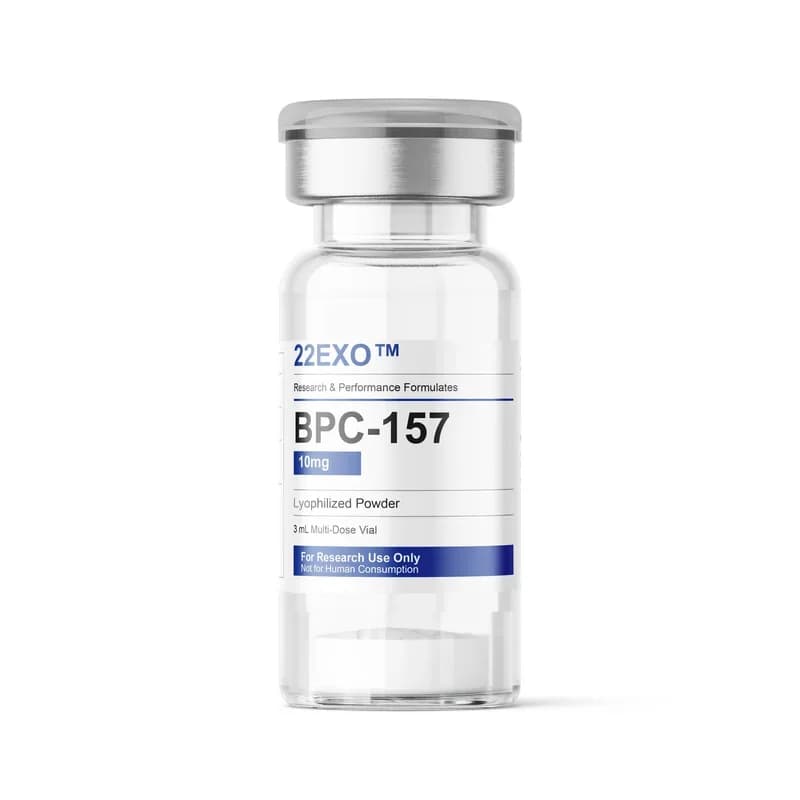
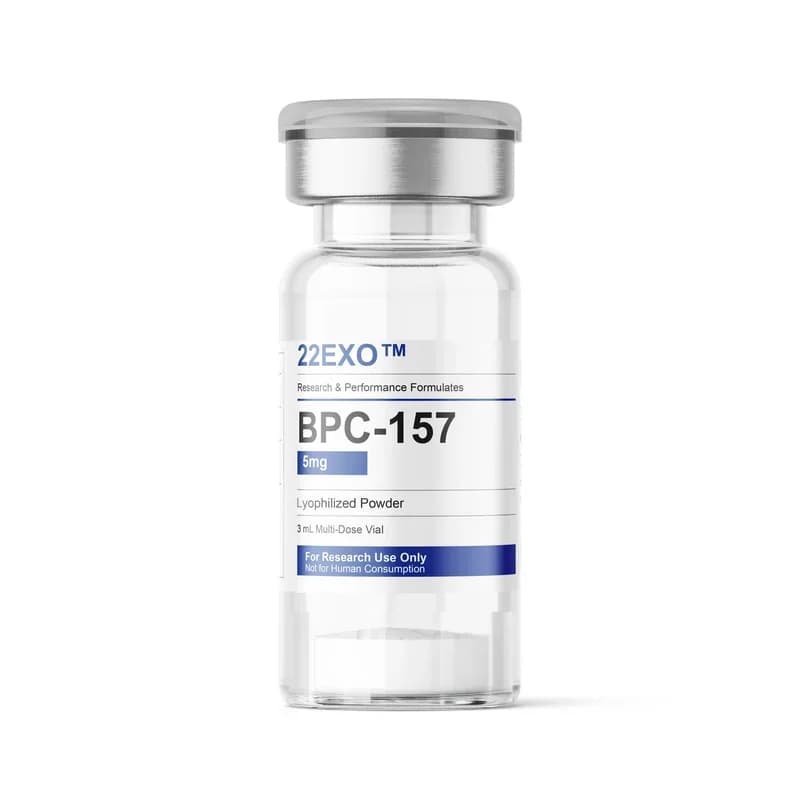
BPC-157 5mg
Research gradeThe gold-standard cytoprotective pentadecapeptide — 15 amino acids isolated from human gastric juice, studied across 100+ publications for tendon healing, GI protection, and tissue repair.
- ≥99% purity
- Third-party COA on file
- Cold packs when needed
You save $19.51 per vial
Only 6 left in stock.
Free standard shipping on orders over $200.00 · Discreet packaging
| 1 vial | $45.49 | |
| 2 vials | $43.22 | Save 5% |
| 3 vials | $40.94 | Save 10% |
| 4 vials | $38.67 | Save 15% |
| 5–9 vials | $36.39 | Save 20% |
| 10+ vials | $34.12 | Unavailable — only 6 in stock |
Tiers apply to the quantity on each cart line; a Subscribe & Save line is priced separately from a one-time line.
- Purity
- ≥99%
- Strength
- 5mg
- CAS
- 137525-51-0
- Formula
- C62H98N16O22
- Form
- Lyophilized Powder
- Vial
- 3 mL Multi-Dose Vial
Sequence: Gly-Glu-Pro-Pro-Pro-Gly-Lys-Pro-Ala-Asp-Asp-Ala-Gly-Leu-Val
Download certificate of analysis (PDF)Ordering for an institution? Volume pricing and purchase orders are available. Wholesale program → · Contact support
Compare sizes
Commonly researched together
Hand-picked companion compounds for research alongside BPC-157 5mg.
Total for 3 items: $151.08
Overview
BPC-157 (Body Protection Compound-157) is a pentadecapeptide composed of 15 amino acids (Gly-Glu-Pro-Pro-Pro-Gly-Lys-Pro-Ala-Asp-Asp-Ala-Gly-Leu-Val), derived from a partial sequence of body protection compound first isolated from human gastric juice. It is one of the most extensively researched cytoprotective peptides in preclinical science, with over 100 published studies spanning musculoskeletal, gastrointestinal, neurological, and cardiovascular models. BPC-157 demonstrates a remarkable breadth of tissue-protective and regenerative activity while maintaining an exceptional safety profile across all studied models. Its origins in endogenous gastric protection make it a compelling subject for research into the body's own cytoprotective mechanisms.
Mechanism
BPC-157 operates through multiple, well-characterized signaling pathways. It robustly upregulates growth factor expression including VEGF, EGF, and NGF, promoting angiogenesis and tissue granulation. Research demonstrates direct modulation of the nitric oxide (NO) system — interacting with both NO-synthase and NO-receptor pathways — which underlies many of its vascular and anti-inflammatory effects. BPC-157 activates the FAK-paxillin pathway critical for cell migration toward wound sites and induces the JAK-2/STAT-3 signaling cascade involved in epithelial healing. It also counteracts NSAID-induced gastric damage by stabilizing the endothelial barrier. The peptide shows strong upregulation of early growth response protein 1 (EGR-1), a transcription factor governing tendon and ligament healing.
Published research
- 1Accelerated healing of transected rat Achilles tendons with improved biomechanical properties including tensile strength and load-to-failure measurements (Staresinic et al., 2003)
- 2Significant cytoprotection against ethanol, NSAID, and stress-induced gastric lesions in multiple validated rodent models — the most replicated finding in BPC-157 literature (Sikiric et al., 1993–2018)
- 3Promotion of tendon-to-bone healing in rotator cuff injury models with enhanced collagen type I and III organization confirmed by immunohistochemistry (Chang et al., 2011)
- 4Neuroprotective effects in traumatic brain injury models with reduced cerebral edema, preserved BBB integrity, and improved cognitive outcomes on Morris water maze testing (Tudor et al., 2010)
- 5Accelerated anastomotic healing in gastrointestinal surgical transection models, including colon, esophagus, and small intestine, outperforming current standard-of-care agents (Sever et al., 2009)
Methodology note: This product summary references published preclinical and clinical research. 22EXO does not make therapeutic claims. All compounds are sold strictly for laboratory and research applications.
Disclaimer: For in-vitro laboratory research use only. Not for human or veterinary use. By purchasing, you agree to our terms of service and confirm that this product will only be used for legitimate research purposes.
Customer reviews
No reviews yet for BPC-157 5mg.
Bought it? Be the first to share how it arrived — packaging, documentation, solubility. Reviews from purchasers are marked Verified Buyer.
Related research
All articlesHow to Source GHRP-6: Purity, COA, HPLC, and Red Flags
Sourcing research-grade GHRP-6 means reading a batch-specific COA, an HPLC purity trace, an MS identity result, and the cold chain. A procurement guide.
8 min readGrowth HormoneGHRP-6 Research Overview: Mechanism, GHS-R Pathway, and What Studies Show
GHRP-6 is a synthetic hexapeptide and GHS-R1a agonist. A research overview of its receptor pharmacology, the PI/PKC pathway, and the preclinical record.
9 min readLongevity & CellularPolypeptide vs Peptide vs Protein: Definitions, Sizes, and Why It Matters
The terms peptide, polypeptide, and protein are used interchangeably in casual conversation and inconsistently in the primary literature. The distinctions are real, biologically meaningful, and directly relevant to how researchers synthesize, store, and handle these molecules in the lab.
10 min readHealing & RecoveryPeptides Near Me: Where Research Labs Source Peptides in Major U.S. Metros
When a lab technician types 'peptides near me,' they are almost certainly asking the wrong question. Here is how research institutions across the ten largest U.S. metros actually source RUO peptides — and why geography matters less than cold-chain logistics.
10 min readHealing & RecoveryAre Research Peptides Legal in the U.S.? RUO and FDA
Research peptides occupy a defined but frequently misunderstood legal category in the U.S. The answer depends on which law applies, what the peptide is, who is buying it, and what it is labeled for.
10 min readHealing & RecoveryBacteriostatic Water for Peptides: Sourcing and Sterility
Bacteriostatic water is sterile water plus 0.9% benzyl alcohol. That additive makes it safe for multi-dose lab use. Here is what it is, where U.S. labs source it, and how storage affects it.
8 min read