Featured
For research use only
Peptide Blends / Healing Blends
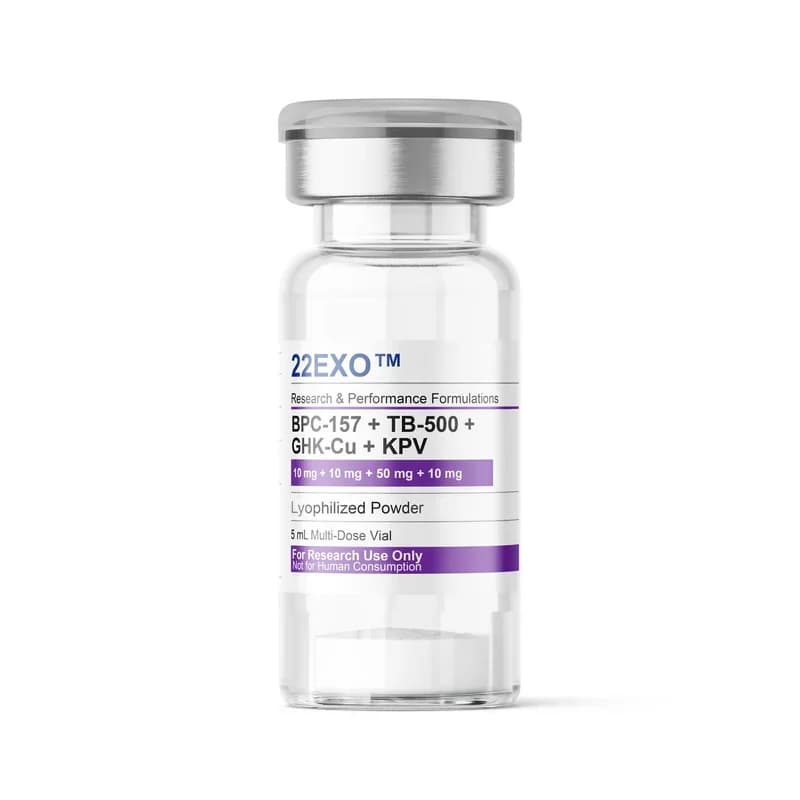
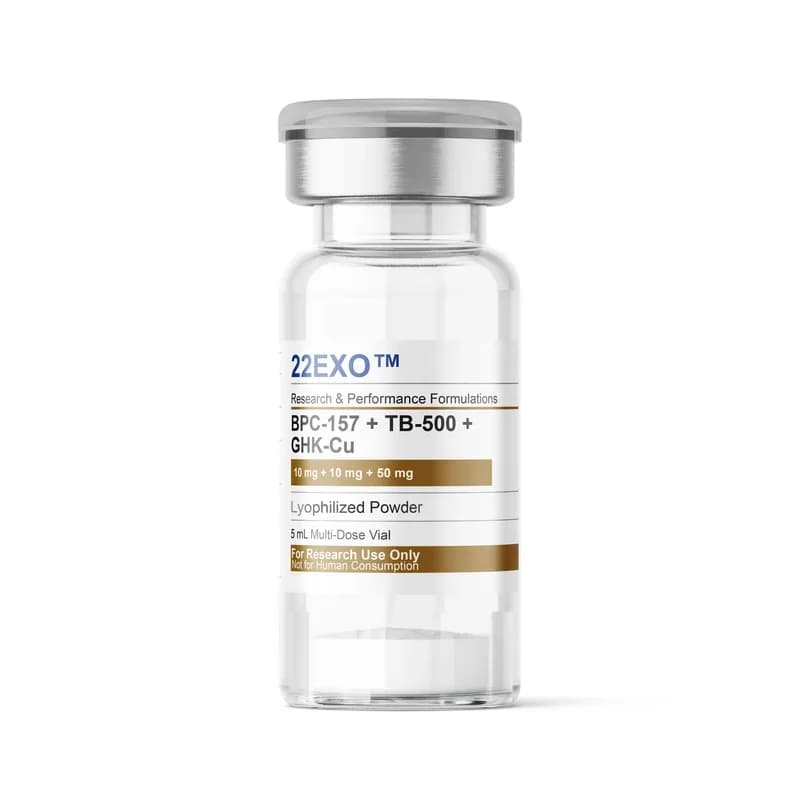
BPC-157 + TB-500 + GHK-Cu Blend (10mg/10mg/50mg)
Research gradeThe ultimate regeneration triple-blend: 10mg BPC-157, 10mg TB-500, and 50mg GHK-Cu combine cytoprotection, systemic angiogenesis, and copper-mediated collagen synthesis for comprehensive tissue repair research.
- Target purity ≥98%
- COA pending: lot documentation on request View details
- Cold packs when needed
Order options
In stock
Save 20%You save $30.00 per vial
Free 2-Day Air at $200.00+ after discounts to eligible US street addresses. Two business days in transit after dispatch. Shipping details · Discreet packaging
Ordering for an institution? Volume pricing and purchase orders are available. Wholesale program → · Contact support
| 1 vial | $118.00 | |
| 2 vials | $112.10 | Save 5% |
| 3 vials | $106.20 | Save 10% |
| 4 vials | $100.30 | Save 15% |
| 5–9 vials | $94.40 | Save 20% |
| 10+ vials | $88.50 | Save 25% |
Tiers apply to the quantity on each cart line; a Subscribe & Save line is priced separately from a one-time line.
Product details & certificate of analysis
Overview
The BPC-157 + TB-500 + GHK-Cu triple-peptide blend represents the most comprehensive regenerative research combination available, incorporating three distinct mechanisms of tissue repair and cellular rejuvenation. BPC-157 (10mg) provides its well-characterized cytoprotective, angiogenic, and musculoskeletal repair activity; TB-500 (10mg) delivers systemic G-actin modulation, cardiac progenitor activation, and remote wound healing signals; GHK-Cu (50mg) adds copper-mediated collagen synthesis stimulation, ECM remodeling, and genome-wide epigenetic normalization toward youthful expression patterns. Together, these peptides address tissue repair at the cellular migration level (BPC-157, TB-500), the extracellular matrix level (GHK-Cu), and the genetic expression level (GHK-Cu's 4,000-gene modulation). This triple combination is particularly targeted at research requiring comprehensive healing responses across connective tissue, skin, musculoskeletal, and wound healing models.
- Target purity
- ≥98% (COA pending)
- Strength
- 10mg/10mg/50mg
- CAS
- 137525-51-0 / 77591-33-4 / 49557-75-7
- Formula
- Triple blend
- Form
- Lyophilized Powder
- Vial
- 3 mL Multi-Dose Vial
Certificate of analysis pending
Third-party certificate of analysis for the current lot is pending. Email [email protected] to request lot documentation before ordering.
Research context
Mechanism
The triple combination creates a multi-level synergy: BPC-157 activates VEGF, JAK-2/STAT-3, and FAK-paxillin pathways for immediate cell migration and vessel formation; TB-500 buffers G-actin to accelerate migration velocity and provides systemic distribution via CXCR4 stem cell homing; GHK-Cu simultaneously activates lysyl oxidase (copper-dependent) for collagen and elastin crosslinking, upregulates collagen I, III, IV synthesis, and modulates expression of 4,000+ repair and remodeling genes. GHK-Cu's anti-fibrotic properties (suppressing TGF-β and TNF-α) complement BPC-157's anti-inflammatory NO pathway activity, together reducing pathological scarring while promoting functional tissue regeneration. The copper delivery from GHK-Cu to cellular Cu/Zn-SOD activates antioxidant defense, protecting regenerating cells from oxidative damage during the repair process.
Published research
- 1BPC-157 component (10mg): Full spectrum of 100+ published cytoprotective findings across tendon, GI, cardiovascular, and neurological models (Sikiric et al., 1993–2018)
- 2TB-500 component (10mg): Systemic myocardial, corneal, neuronal, and wound healing across species models (Smart et al., 2007; Malinda et al., 1999; Santra et al., 2012)
- 3GHK-Cu component (50mg): 70% collagen synthesis increase, 4,000+ gene modulation, ECM remodeling, and anti-fibrotic activity (Maquart et al., 1992; Campbell et al., 2012)
- 4Synergistic rationale: Three independent VEGF upregulation pathways (BPC-157 transcriptional, TB-500 receptor sensitization, GHK-Cu endothelial migration) creating multiplicative angiogenic drive
- 5GHK-Cu anti-fibrotic activity (TGF-β suppression) complements BPC-157 and TB-500 healing to shift wound repair from fibrotic scar toward functional tissue regeneration
Methodology note: This product summary references published preclinical and clinical research. 22EXO does not make therapeutic claims. All compounds are sold strictly for laboratory and research applications.
Disclaimer: For in-vitro laboratory research use only. Not for human or veterinary use. By purchasing, you agree to our terms of service and confirm that this product will only be used for legitimate research purposes.
Related research
All articlesWhy BPC-157, TB-500, and GHK-Cu Get Stacked Together: The Mechanism Map
Three peptides, three different cellular processes, one tissue-repair logic. The combination has become one of the most-used research stacks. Here is the mechanistic case for why, and what the evidence actually supports.
10 min readHealing & RecoveryThymosin Beta-4 and the Actin Pool: What TB-500 Actually Does at the Cellular Level
TB-500 is a fragment of thymosin beta-4, a 43-residue protein whose primary cellular role is sequestering G-actin monomers. The mechanism is unusual, the literature is dense, and the therapeutic implications are still being worked out.
10 min readHealing & RecoveryGHK-Cu: The Copper Peptide That Reorganizes Itself in Aging Skin
GHK is a tripeptide that copper finds. The Pickart lab spent four decades showing what happens when it does. From a 1973 plasma fraction to over 60 published papers on wound healing, dermal remodeling, and gene expression, here is the research record.
11 min readHealing & RecoveryHealing Peptide Blends: BPC-157 + TB-500 + GHK-Cu: Why Researchers Combine Them
BPC-157, TB-500, and GHK-Cu each target different phases of the tissue repair cascade. A research-based explanation of the three-phase healing model and why the published data supports studying these peptides together.
13 min readHealing & RecoveryBPC-157 vs TB-500: Research Comparison and Evidence Limits
BPC-157 and TB-500 are frequently compared and often stacked, but their mechanisms are genuinely distinct. A research-grounded breakdown of what the published data actually shows for each peptide.
10 min readComplementary compounds
Handling & storage
Handling & storage
Store lyophilized blend at −20°C, protected from light. GHK-Cu is the most light-sensitive component: use amber vials. All three peptides are compatible at neutral to slightly acidic pH. Reconstituted solution stable at 2–8°C for up to 14 days. Lyophilized form stable 24+ months at −20°C. Do not expose to alkaline conditions which may cause GHK-Cu dissociation.
Reconstitution: Add bacteriostatic water slowly along the vial wall. Gently swirl until dissolved.
Contents: 10mg/10mg/50mg lyophilized powder in a 3 ml multi-dose vial with mannitol excipient.
What arrives
- 3 mL Multi-Dose Vial glass vial with lyophilized powder
- Crimp-sealed cap with tamper-evident seal
- Lot documentation available on request
- Insulated packaging, with a cold pack when weather or transit time warrant it
- Discreet shipping, no product names on the exterior
Customer reviews
No reviews yet for BPC-157 + TB-500 + GHK-Cu Blend (10mg/10mg/50mg).
Bought it? Be the first to share how it arrived: packaging, documentation, solubility. Reviews from purchasers are marked Verified Buyer.
Curated research companions
Choose any catalog items you want to add alongside BPC-157 + TB-500 + GHK-Cu Blend (10mg/10mg/50mg).
BPC-157 + TB-500 + GHK-Cu Blend (10mg/10mg/50mg)$118.00Total for 3 items: $211.08