MOTS-c: The Mitochondrial Peptide That Acts Like an Exercise Pill
MOTS-c is a mitochondrial-encoded peptide that rises during exercise and activates AMPK — doubling running capacity in old mice in USC's Reynolds 2021 study. A detailed look at what the research actually found.
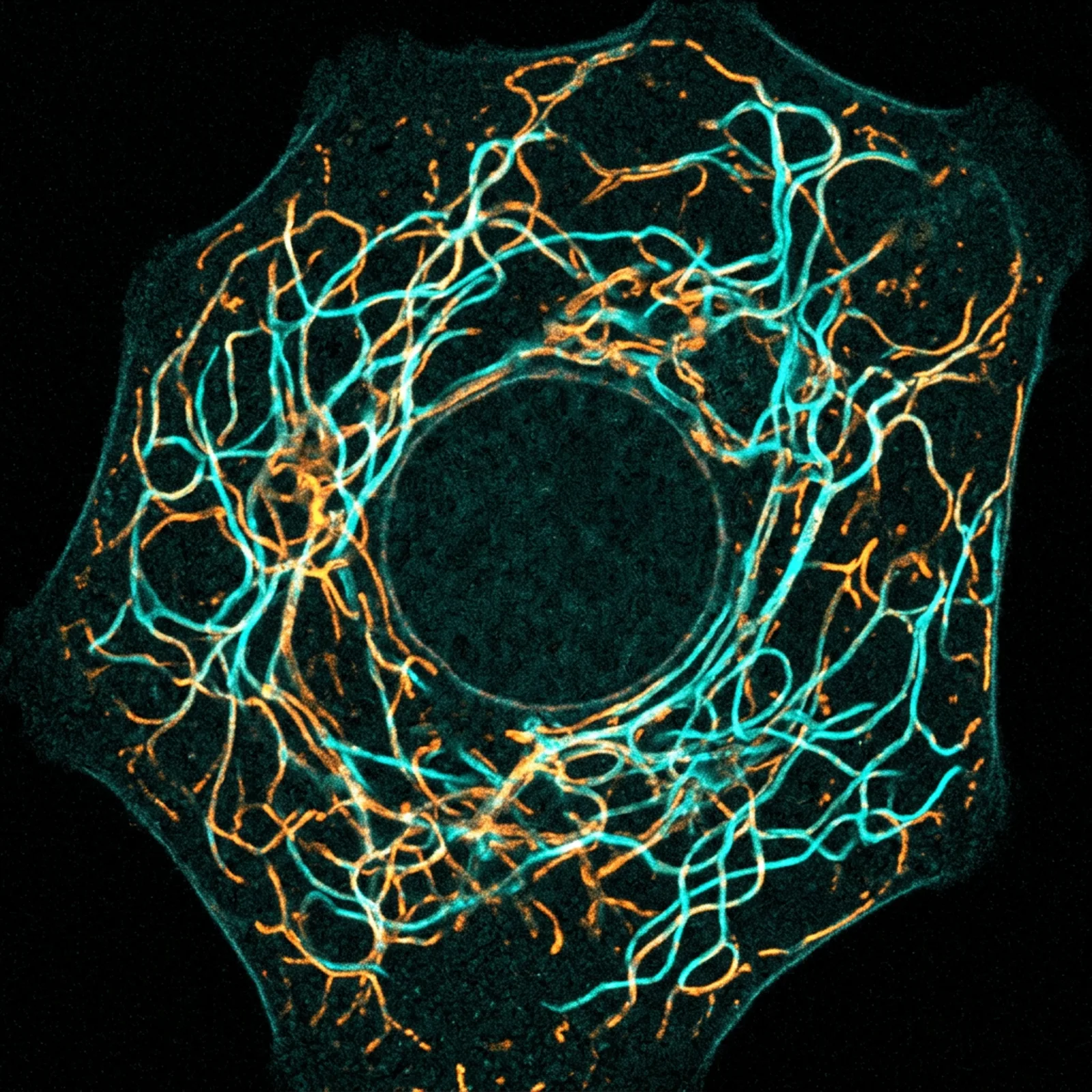
The Peptide Encoded Inside Mitochondrial DNA
For most of biology's history, mitochondria were understood to encode only what they needed to keep their own machinery running — a small genome managing a narrow set of jobs related to oxidative phosphorylation. That view has been systematically revised over the last decade. It turns out the mitochondrial genome encodes signaling peptides — called mitochondrial-derived peptides, or MDPs — that act as hormones, traveling from mitochondria to distant tissues to coordinate whole-body responses to energy status, stress, and aging.
MOTS-c (mitochondrial open reading frame of the 12S rRNA-c) is the most studied of these MDPs. A 16-amino-acid sequence encoded within the mitochondrial 12S ribosomal RNA gene, it was first characterized by Changhan David Lee's group at the USC Leonard Davis School of Gerontology. Lee and colleagues published the discovery paper in Cell Metabolism in March 2015, and the findings were striking enough to generate immediate interest across the aging research community. A peptide encoded not in nuclear DNA but in the mitochondrial genome — produced by the cell's own energy generators — that regulates whole-body metabolic homeostasis and responds to exercise signals. Here's where it gets weird: this means your mitochondria are talking to your muscles, liver, and fat tissue through their own dedicated signaling molecule.
Lee et al., 2015: The Discovery and Its Mechanism
Lee's 2015 Cell Metabolism paper identified MOTS-c's primary cellular mechanism with unusual clarity, which is rare in a first characterization paper. The peptide inhibits the folate-methionine cycle — specifically at the level of 5-methyltetrahydrofolate (5Me-THF). This inhibition causes accumulation of AICAR (5-aminoimidazole-4-carboxamide ribonucleotide). AICAR is a well-characterized, potent AMPK activator — it's actually been studied independently as an exercise mimetic for years before MOTS-c was discovered.
AMPK (AMP-activated protein kinase) is the cell's master energy-sensing enzyme — the molecular switch that gets flipped when the ATP-to-AMP ratio drops, signaling energy shortage and driving adaptations that restore metabolic balance. AMPK activation improves insulin sensitivity, drives mitochondrial biogenesis, promotes fatty acid oxidation, suppresses de novo lipogenesis, and triggers autophagy. It's the shared molecular mechanism of several well-validated longevity interventions: metformin, resveratrol, and caloric restriction all activate AMPK, though through different upstream routes. MOTS-c does it through a physiological endogenous pathway — inhibiting folate cycle to produce AICAR, which then activates AMPK.
In mouse models, Lee's group found that systemic MOTS-c treatment prevented age-dependent and high-fat diet-induced insulin resistance, and prevented diet-induced obesity without reducing food intake. The mechanism wasn't appetite suppression — food consumption was unchanged. Instead, MOTS-c appeared to increase energy expenditure through thermogenesis (heat production), suggesting effects on brown/beige adipose tissue. In skeletal muscle, AMPK activation increased GLUT4 expression — the insulin-independent glucose transporter — improving glucose uptake efficiency. Restoring MOTS-c levels by injection in older mice (12 months) successfully reversed age-dependent skeletal muscle insulin resistance.
MOTS-c also increases intracellular NAD+ levels. Since NAD+ is the primary cofactor for sirtuin enzymes (SIRT1, SIRT3), which themselves regulate mitochondrial biogenesis and stress responses, this NAD+ elevation adds another layer to MOTS-c's metabolic effects beyond direct AMPK activation. The pathway architecture is: MOTS-c → folate cycle inhibition → AICAR accumulation + NAD+ elevation → AMPK/SIRT1 activation → improved metabolic homeostasis.
Reynolds et al., 2021: The Exercise Performance Paper
Lee's group followed the 2015 mechanistic discovery with a 2021 paper in Nature Communications — first authored by Joseph C. Reynolds, a postdoctoral researcher at USC — that elevated MOTS-c into a different conversation entirely: physical performance and aging.
The paper's most dramatic finding: old mice (22 months of age, roughly equivalent to a 65–70 year-old human) treated with MOTS-c at 5 mg/kg/day intraperitoneally for two weeks ran twice as long on the treadmill as untreated mice of the same age. Old MOTS-c-treated mice ran 2-fold longer (time) and 2.16-fold farther (distance) than untreated old controls. And — this is the detail that got Lee quoted in press releases — those treated old mice were able to outperform untreated middle-aged mice.
"The older mice were the human equivalent of 65 and above and once treated, they doubled their running capacity on the treadmill," Lee told USC's communications office. "They were even able to outrun their middle-aged, untreated cohorts." The result wasn't just rejuvenating old animals to a younger animal's baseline performance — it was pushing them beyond what middle-aged untreated animals could achieve. 17% of MOTS-c-treated old mice completed the final (highest speed) stage of the treadmill test; none in the untreated old group succeeded.
The effects were consistent across age groups, though most pronounced in the oldest animals. Young mice (2 months) showed improved rotarod performance. Middle-aged mice (12 months) ran significantly longer with increased power output in joules. Old mice showed the most dramatic improvements in absolute terms. MOTS-c treatment improved performance regardless of whether mice were on a normal diet or a high-fat diet (60% calories from fat).
Metabolomics on skeletal muscle collected immediately post-exercise revealed that MOTS-c significantly regulated glycolysis and amino acid metabolism — suggesting improved metabolic flexibility, the ability to efficiently switch between fuel sources depending on demand. This metabolic flexibility is exactly what endurance exercise training produces over months in human athletes — and apparently MOTS-c can accelerate or mimic aspects of this adaptation in weeks in mice.
The Human Connection: Exercise Induces Endogenous MOTS-c
Reynolds' 2021 paper included human data that changes how you think about MOTS-c — not as a pharmacological compound with exercise-like effects, but as an actual molecular signal that your body produces during exercise. The study measured MOTS-c in human blood before, during, and after exercise. Circulating MOTS-c levels increased 1.6-fold during exercise and 1.5-fold immediately after, returning to baseline after 4 hours of rest. MOTS-c expression in skeletal muscle itself also increased with exercise.
This is significant. MOTS-c isn't a synthetic peptide that happens to activate exercise pathways by coincidence. It's an endogenous exercise-induced mitohormone — a signal that your own mitochondria produce when you work out, driving some of the metabolic adaptations that make exercise beneficial. Lee's group proposed that the age-related decline in MOTS-c levels contributes to reduced metabolic flexibility and physical capacity in older adults — and that the therapeutic rationale for exogenous MOTS-c is restoration of a signal that aging mitochondria produce in diminishing quantities.
A 2022 pilot study in Reviews in Cardiovascular Medicine comparing professional endurance athletes to sedentary controls found complex patterns: Humanin (another MDP) was elevated in athletes, while MOTS-c baseline levels were actually lower in the chronic high-endurance training groups compared to sedentary controls. The authors interpreted this cautiously — chronic high-volume exercise may consume MOTS-c faster than it's produced at rest, or receptor adaptation may reduce baseline circulating levels in highly trained individuals. Acute exercise raises MOTS-c; the chronic exercise relationship with resting levels is more complicated and requires further study.
Late-Life Initiation: Starting Old, Getting Results
One of the most practically relevant findings in the Reynolds 2021 paper was from the late-life initiated intermittent treatment (LLII) protocol. Mice were treated starting at 23.5 months of age — extremely late in the mouse lifespan, representing perhaps 85+ in human equivalency — with MOTS-c three times per week rather than daily. Even with this late start and reduced frequency, MOTS-c improved grip strength, gait measured by stride length, and physical performance on a walking test. There was a trend (P=0.05 at 31.8 months) toward increased median lifespan (6.4%) and maximum lifespan (7.0%), with a reduced hazard ratio of 0.654 — though the authors rightly noted that larger cohorts would be needed to confirm longevity effects definitively.
The concept of "morbidity compression" — shortening the period of poor health and physical limitation at the end of life even without extending total lifespan dramatically — is one of the most practically valuable goals in aging research from a quality-of-life perspective. The LLII data suggests MOTS-c treatment may achieve something like this: maintaining physical capacity much later into the aging process, potentially compressing the period of physical frailty that precedes death. The finding that treatment starting very late in life still produces functional improvements is particularly important for human therapeutic translation.
The AMPK Pathway and Why It's Central to Longevity Research
Understanding MOTS-c's mechanism requires understanding why AMPK activation is so central to longevity biology. AMPK was initially characterized as a cellular energy sensor — it responds to falling ATP levels by activating catabolic pathways (fat oxidation, glucose uptake) and suppressing anabolic pathways (lipogenesis, protein synthesis) to restore energy balance. But over the last two decades, AMPK has also been established as a longevity-promoting pathway in its own right.
AMPK activates PGC-1α (peroxisome proliferator-activated receptor gamma coactivator 1-alpha), the master regulator of mitochondrial biogenesis. More mitochondria per cell means greater energy production capacity, better stress resilience, and reduced reactive oxygen species production per unit of energy output. A 2025 study published in Skeletal Muscle confirmed MOTS-c improves intrinsic mitochondrial bioenergetic health and efficiency specifically through a PGC-1α/AMPK-dependent mechanism — not just activating existing mitochondria better, but increasing mitochondrial numbers and improving their fundamental efficiency.
AMPK also directly phosphorylates and activates SIRT1, linking MOTS-c's effects to the entire sirtuin-deacetylase signaling network involved in DNA repair, stress resistance, and metabolic homeostasis. And AMPK suppresses mTORC1 — the main pro-anabolic, pro-aging kinase that caloric restriction is thought to partly work through. The convergence of AMPK effects on mitochondrial biogenesis, sirtuin activation, and mTORC1 suppression positions MOTS-c's mechanism squarely at the center of contemporary longevity biology.
Research Context and Open Questions
MOTS-c is still in the early phase of its research trajectory relative to more established peptides. The significant animal data comes primarily from Lee's USC group and a handful of independent follow-up studies. Human clinical trial data is essentially absent for exogenous MOTS-c administration — the 2021 paper's human data measured endogenous MOTS-c during exercise in healthy subjects, not the effects of administered MOTS-c on human performance. Translation of the 5 mg/kg/day intraperitoneal mouse dose to an equivalent human subcutaneous dose requires allometric conversion and route-of-administration adjustments that produce significantly lower numbers.
The positive framing deserves qualification: mouse metabolic physiology differs from human physiology in important ways, particularly regarding muscle fiber type composition, baseline metabolic rate, and the relationship between exercise and longevity pathways. Results from mouse physical performance models, while compelling, need human validation before clinical conclusions can be drawn.
For researchers investigating mitochondrial biology, metabolic homeostasis, and age-related physical decline, MOTS-c 10mg is available as a research compound. The AMPK activation mechanism that MOTS-c engages connects directly to NAD+ 500mg — NAD+ being the primary substrate for the sirtuin enzymes that work downstream of AMPK activation — making these two compounds logical candidates for co-administration in metabolic aging research. Researchers studying multiple longevity mechanisms sometimes include Epithalon 10mg for its complementary telomere maintenance approach, representing a different molecular target in aging biology overall.
The "exercise pill" framing that gets applied to MOTS-c in popular science writing is mechanistically grounded in ways that most such labels are not. MOTS-c is literally produced by mitochondria during exercise and activates multiple pathways through which exercise exerts its health benefits. Whether exogenous administration reproduces those benefits in humans at the magnitude seen in mice is the key open question — and the mouse data from Lee and Reynolds' groups is a compelling reason to watch this peptide's clinical development closely.
Frequently Asked Questions
What is MOTS-c and where does it come from?
<a href="/product/mots-c-10mg">MOTS-c</a> (mitochondrial open reading frame of the 12S rRNA-c) is a 16-amino-acid peptide encoded within the mitochondrial genome — specifically within the 12S ribosomal RNA gene. Discovered by Changhan David Lee's group at USC (Cell Metabolism, 2015), it's unique in being encoded by mitochondrial DNA rather than nuclear DNA, making it one of the few known mitochondrially-encoded hormone-like signals.
What did the 2021 Reynolds Nature Communications study find about exercise performance?
Reynolds et al. found <a href="/product/mots-c-10mg">MOTS-c</a> (5 mg/kg/day IP) significantly enhanced physical performance across young, middle-aged, and old mice. Old mice equivalent to 65+ year-old humans doubled their treadmill running time and 17% completed the highest-speed stage versus 0% in untreated controls. Treated old mice outperformed untreated middle-aged mice. In humans, exercise increased circulating MOTS-c 1.6-fold, confirming it as an exercise-induced mitochondrial signal.
How does MOTS-c activate AMPK?
<a href="/product/mots-c-10mg">MOTS-c</a> inhibits the folate-methionine cycle at 5-methyltetrahydrofolate (5Me-THF), causing accumulation of AICAR — a potent AMPK activator. MOTS-c also increases NAD+ levels, which activates SIRT1 that works cooperatively with AMPK. A 2025 Skeletal Muscle study confirmed MOTS-c improves mitochondrial bioenergetic efficiency through a PGC-1α/AMPK-dependent mechanism, including stimulating mitochondrial biogenesis.
Does MOTS-c produce exercise benefits without actual exercise?
In mouse studies, <a href="/product/mots-c-10mg">MOTS-c</a> treatment improved physical performance and metabolic parameters including prevention of diet-induced obesity and insulin resistance — without changing food intake. However, metabolomics data from skeletal muscle showed MOTS-c primarily produced adaptive metabolic responses during exercise, suggesting its benefits are most pronounced when combined with physical activity rather than entirely replacing it.
What is the significance of the late-life MOTS-c treatment results?
Reynolds et al. found that initiating <a href="/product/mots-c-10mg">MOTS-c</a> treatment at 23.5 months of age — very late in the mouse lifespan — still improved grip strength, gait, and physical performance. There was a trend toward increased median (6.4%) and maximum (7.0%) lifespan with reduced hazard ratio (0.654, P=0.05). This suggests MOTS-c may compress the period of physical frailty near end-of-life even when started late — a clinically relevant finding for potential human applications.