Thymosin Alpha-1 and Immune Modulation: From Hepatitis Treatment to Broader Applications
Thymosin alpha-1 is approved in over 35 countries for hepatitis treatment and carries one of the most extensive clinical records of any research peptide — including compelling COVID-19 mortality data from 2020. Here's what the research actually shows about its Toll-like receptor mechanism and who benefits most.
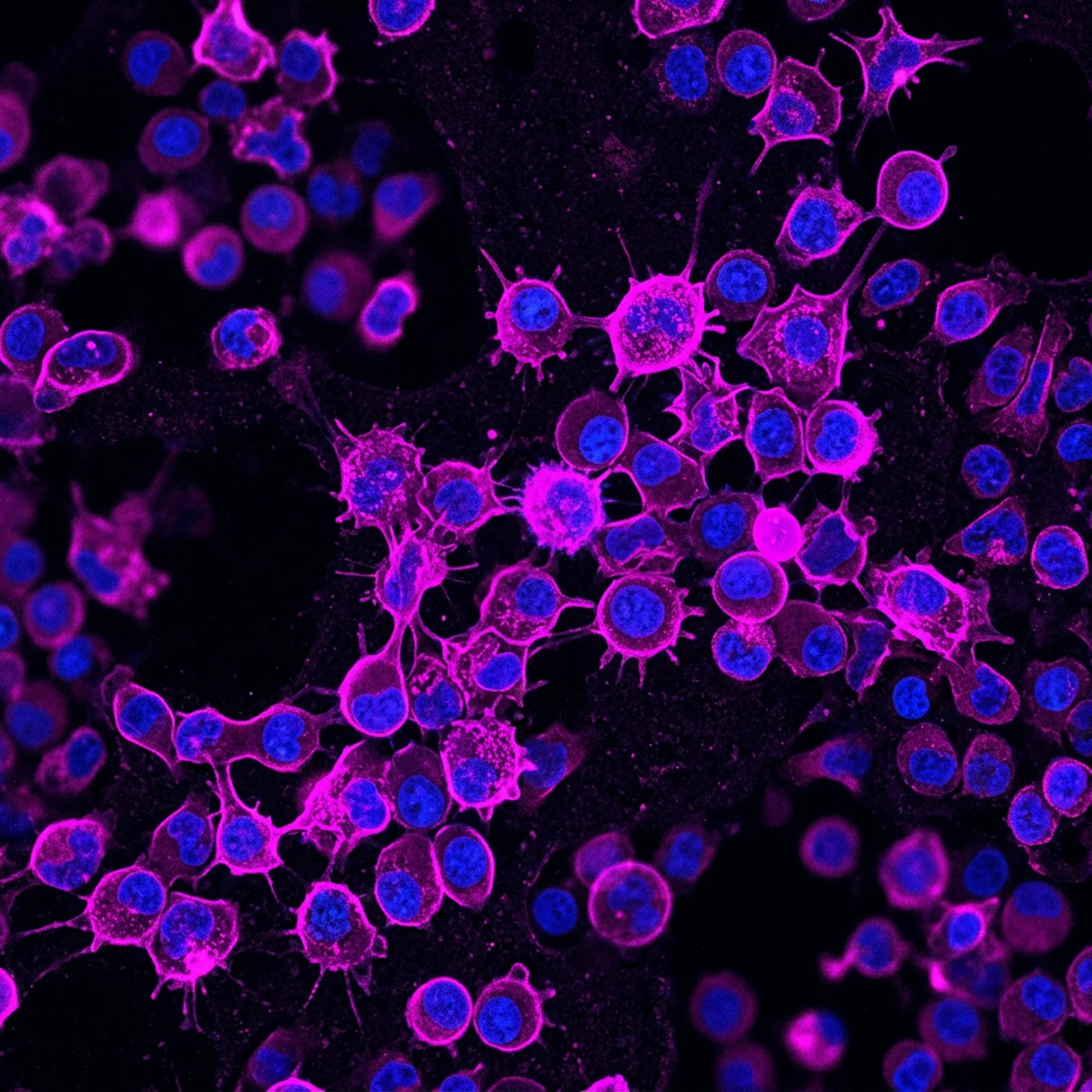
There's a small peptide that's been approved as a drug in more than 35 countries for decades — and most Western researchers barely know it exists. Thymosin alpha-1 (Tα1) has a long, well-documented clinical history in Asia, Eastern Europe, and Latin America, where it's prescribed under the brand name Zadaxin for hepatitis B and C and used as an immune adjuvant in cancer care. In the U.S., it remains unapproved by the FDA as a finished drug product, which means most of the research conversation happens in academic journals rather than physicians' offices.
What makes this peptide scientifically interesting isn't just the hepatitis data — it's the mechanism. Tα1 acts through Toll-like receptors (TLRs), the same ancient pattern-recognition system your immune cells use to detect bacterial and viral threats. That gives it a genuinely pleiotropic profile: it doesn't just target one cytokine or one cell type. It modulates a whole network. And the COVID-19 data from 2020 put it squarely back on researchers' radar in a way that hadn't happened since the 1990s hepatitis trials.
What Thymosin Alpha-1 Actually Is
Tα1 is a 28-amino-acid peptide originally isolated from thymic tissue in the 1970s by Allan Goldstein's group. The thymus — that small organ behind your sternum that most people forget about after childhood — produces it naturally as part of thymic hormone signaling. Tα1 appears to play a role in T-cell maturation and in setting appropriate immune tone throughout life.
The synthetic version, thymalfasin, is chemically identical to the naturally occurring peptide. It's what goes into Zadaxin, manufactured by SciClone Pharmaceuticals for international markets. When researchers refer to Tα1 in literature, they're studying this same sequence regardless of whether the source material is isolated from thymus or produced synthetically.
One thing worth understanding upfront: this is not an immunosuppressant, and it's not a blunt immune stimulant either. It's an immunomodulator — something that pushes a dysregulated system toward balance. That distinction matters, because the populations where Tα1 seems to help most are those whose immune systems are either exhausted (as in chronic viral infection) or inappropriately activated (as in some stages of severe COVID-19).
The Toll-Like Receptor Mechanism
The key to understanding how Tα1 works lies in Toll-like receptors — TLRs. These are proteins sitting on the surface of immune cells, particularly myeloid dendritic cells and plasmacytoid dendritic cells. Their job is to recognize molecular patterns associated with pathogens: bacterial cell wall fragments, viral RNA, unmethylated DNA. When a TLR fires, it triggers a signaling cascade that activates NF-κB, produces cytokines, and alerts the adaptive immune system to start building a targeted response.
Tα1 acts as an agonist at TLR-2 and TLR-9 specifically. The comprehensive review published in the World Journal of Virology in 2020 — the Dominari et al. paper — describes this mechanism in detail, noting that by targeting these receptors in both myeloid and plasmacytoid dendritic cells, Tα1 stimulates the adaptive immune response and has downstream effects on T-cell activation, IL-2 receptor expression, and the production of interferon-alpha.
Here's where it gets interesting: TLR activation usually ramps immunity up. But Tα1 also has negative modulatory effects on IL-1β and tumor necrosis factor-alpha, which dampens inflammatory response. So you get both — enhanced pathogen recognition and clearing, alongside reduced collateral inflammation. That dual action is why it performs differently from simple immunostimulants.
There's also evidence from the Dominari et al. review that Tα1 increases MHC class I antigen presentation — essentially helping infected cells display viral proteins more prominently on their surface, making them easier targets for cytotoxic T cells. And it directly inhibits viral replication through mechanisms that aren't fully characterized but appear to be independent of the TLR pathway.
Hepatitis B: Where the Clinical Record Started
The bulk of Tα1's clinical history involves chronic hepatitis B, where it was tested extensively through the 1980s and 1990s. The underlying problem in chronic HBV is instructive: the virus persists not because it's particularly clever at evading detection, but because it triggers a kind of immune exhaustion. T cells that should be attacking infected hepatocytes become dysfunctional over time — expressing high levels of inhibitory receptors like PD-1 and TIM-3, which essentially put the brakes on the immune response.
Tα1 appears to partially reverse this. Data from Sherman et al.'s work (cited in the Dominari review) showed virological response rates of around 40.6% in patients receiving 1.6 mg subcutaneously twice weekly for 52 weeks — roughly double the response rate in control groups. The results were good enough that more than 35 countries approved thymalfasin for chronic hepatitis B, even though the U.S. FDA never completed the approval process for that indication.
Hepatitis C data has been more mixed. As monotherapy, Tα1 doesn't do much against HCV. In combination with interferon-alpha, however, combination therapy showed meaningful benefit in difficult-to-treat populations. A landmark randomized controlled trial published in 1998 showed that the combination achieved biochemical response in 37.1% of patients, compared to 16.2% for interferon alone. Both HBV and HCV treatment with Tα1 have since been largely superseded by direct-acting antivirals, which are simply more effective. But the mechanism — T cell recovery, reduced immune exhaustion — remains highly relevant to other chronic infections.
COVID-19: The Data That Brought It Back
When SARS-CoV-2 swept through Wuhan in early 2020, Chinese hospitals reached for thymosin alpha-1. It was already on formularies. It was well-understood. And critically, the immune pathology of severe COVID-19 looked remarkably like what Tα1 was designed to address: severe lymphopenia, T-cell exhaustion, and dysregulated cytokine activity.
The study that drew the most attention was published in Clinical Infectious Diseases in 2020 by Liu et al., reviewing 76 severe COVID-19 cases from two Wuhan hospitals. The numbers were striking. Among patients who received Tα1 treatment, mortality was 11.11% (4 of 36 patients). Among untreated controls, mortality reached 30% (12 of 40). That's a statistically significant difference — P = 0.044 — in a retrospective analysis.
Mechanistically, the Liu group showed that Tα1 enhanced T-cell counts in patients with severe lymphopenia, restoring both CD8+ and CD4+ T cells, and reduced expression of the exhaustion markers PD-1 and TIM-3 on CD8+ T cells. The researchers found that patients with particularly low T-cell counts — CD8+ below 400/μL, CD4+ below 650/μL — showed the greatest benefit. Patients with higher baseline T-cell counts didn't seem to gain much from treatment. That's a meaningful observation for understanding who might benefit most.
At the same time, the picture isn't uniformly positive. A separate prospective study of non-severe COVID-19 patients (published in Frontiers in Medicine, 2021) found that Tα1 did not prevent disease progression or reduce mortality in that population — though it significantly shortened viral RNA shedding duration (13 vs. 16 days) and hospital stay (14 vs. 18 days). A meta-analysis published in the American Journal of Emergency Medicine in 2021 concluded that, across available studies, there was no significant correlation between Tα1 treatment and mortality overall. The implication: Tα1's benefit appears concentrated in the severely immunocompromised subgroup, not the general COVID-positive population.
We found this nuance particularly important. The COVID-19 data on Tα1 is not a simple story of a peptide that prevents death. It's a story about immune restoration in a specific, deeply depleted patient subset — which is actually the more scientifically interesting finding.
Beyond Hepatitis and COVID: Broader Research Applications
The clinical trial record for Tα1 extends into several other areas. It's been studied in DiGeorge syndrome, non-small cell lung cancer as an adjuvant to chemotherapy, hepatocellular carcinoma, and HIV. The FDA has granted orphan drug status for thymalfasin in malignant melanoma, DiGeorge anomaly with immune defects, and hepatocellular carcinoma — though approved drug products containing Tα1 don't exist in the U.S. as of 2024.
The vaccine adjuvant data is particularly interesting. Multiple studies have shown that Tα1 enhances antibody responses to influenza vaccination in elderly patients and in hemodialysis patients who previously failed to mount adequate titers. For a population whose immune systems are naturally suppressed — by age, by dialysis, by comorbidities — having something that can restore vaccine responsiveness without significant side effects is genuinely valuable.
Sepsis and Immunoparalysis
One area that has attracted serious research attention is sepsis-related immunoparalysis. Severe sepsis often creates a paradoxical state: after the initial cytokine storm subsides, many patients enter a phase of profound immune suppression that leaves them vulnerable to secondary infections. The T-cell exhaustion pattern in this phase looks similar to what's seen in chronic HBV and severe COVID-19. Several investigator-initiated trials have examined Tα1 in this context, with generally encouraging results in restoring immune function.
Cancer Adjuvant Use
In oncology, the theoretical rationale is that chemotherapy and radiation deplete immune cell counts, and Tα1 might help reconstitute immune function faster — or enhance tumor antigen presentation to improve response to checkpoint inhibitors. This is genuinely exploratory territory, and the clinical data here is thinner than in viral infection. But the mechanistic logic is sound, and several combination studies are underway.
Safety Profile
One of the more reassuring aspects of Tα1's decades-long clinical record is the safety data. The Dominari et al. review notes that thymalfasin is well-tolerated with only minor side effects. In clinical trials spanning multiple indications, there have been no significant adverse events attributable to the peptide itself. No immunogenicity signal, no autoimmune induction, no metabolic perturbation. The injection site can develop mild erythema, which resolves. That's essentially the entire safety concern profile from 30+ years of clinical use.
This stands in contrast to other immunomodulators — interferon-alpha, for instance, carries a heavy side-effect burden including flu-like symptoms, depression, and cytopenias. Tα1 appears to work by restoring a deficient signal rather than overwhelming existing pathways, which may explain its relatively clean safety profile.
Research Context for Tα1 Combinations
Some researchers studying immune modulation combine Tα1 with other compounds that support different aspects of immune function or cellular energy. NAD+ precursors have been of interest because of NAD+'s role in immune cell metabolism — T cells with depleted NAD+ lose functional capacity, and restoration of NAD+ levels appears to support T-cell energetics. The NAD+ 500mg available from 22EXO represents one direction researchers explore in this context.
Semax, another peptide with neuroimmune properties, has been studied in overlapping contexts involving immune regulation after brain injury. For researchers specifically interested in Tα1 itself, Thymosin Alpha-1 5mg is available for research purposes.
What the Research Actually Tells Us
Thymosin alpha-1 occupies an unusual position in peptide research. It has genuine clinical validation in multiple countries and indications — more than almost any other peptide on the research market. The hepatitis data is solid, even if those indications have been eclipsed by better drugs. The COVID-19 mortality data from the Liu group is compelling, if limited to a specific immune-depleted subgroup. The vaccine adjuvant data is consistent and reproducible.
What it isn't is a general-purpose immune booster. The research most consistently shows benefit in conditions characterized by immune exhaustion or dysfunction — not in healthy individuals with intact immunity. Understanding that distinction is essential for interpreting the literature correctly and for designing studies that might produce meaningful results.
The Toll-like receptor mechanism is well-established. The clinical history is extensive. The safety record is about as clean as anything in peptide research. For researchers interested in immune modulation, Tα1 remains one of the more rigorously characterized peptides available for study — and the growing interest in T-cell biology, checkpoint pathways, and viral immunosenescence suggests its scientific relevance is only increasing.
Frequently Asked Questions
Is thymosin alpha-1 FDA approved?
No finished drug product containing <a href="/product/thymosin-alpha-1-5mg">thymosin alpha-1</a> has received FDA approval in the United States. However, thymalfasin (the synthetic form) is approved in more than 35 countries for hepatitis B and C treatment and as an immune adjuvant. The FDA has granted orphan drug designation for certain indications including malignant melanoma and DiGeorge syndrome.
How does thymosin alpha-1 differ from other immune peptides?
<a href="/product/thymosin-alpha-1-5mg">Thymosin alpha-1</a> is an immunomodulator rather than a simple stimulant. It acts through Toll-like receptors TLR-2 and TLR-9 to enhance T-cell activation and antigen presentation while also reducing excessive inflammatory cytokines like IL-1 beta and TNF-alpha. This dual action distinguishes it from compounds that only push immunity in one direction.
What did the COVID-19 research on thymosin alpha-1 show?
A 2020 retrospective study (Liu et al., Clinical Infectious Diseases) of 76 severe COVID-19 patients in Wuhan found mortality of 11.11% in the T-alpha-1-treated group versus 30% in untreated controls (P=0.044). Benefit was concentrated in patients with severe lymphopenia — those with CD8+ T-cell counts below 400 per microliter showed the greatest improvement.
What is the standard dosing used in hepatitis clinical trials?
Most hepatitis B trials used 1.6 mg administered subcutaneously twice weekly. Some protocols ran for 6 months and others for 52 weeks. This dosing produced a virological response rate of approximately 40.6% in key trials. Specific dosing for research use should reference primary literature.
Can thymosin alpha-1 be combined with other peptides?
In clinical practice, <a href="/product/thymosin-alpha-1-5mg">thymosin alpha-1</a> has been studied in combination with interferon-alpha for hepatitis C, where combination therapy significantly outperformed monotherapy. Researchers have theorized about combinations with NAD+ precursors based on NAD's role in T-cell metabolism, though formal combination studies in that context are limited.