CJC-1295 With vs. Without DAC: Pharmacokinetics, Half-Life, and What Matters for Research
CJC-1295 with DAC has a half-life of 5.8–8.1 days; the no-DAC version clears in 20–30 minutes. A data-grounded breakdown of what those numbers mean for GH pulsatility and research protocol design.
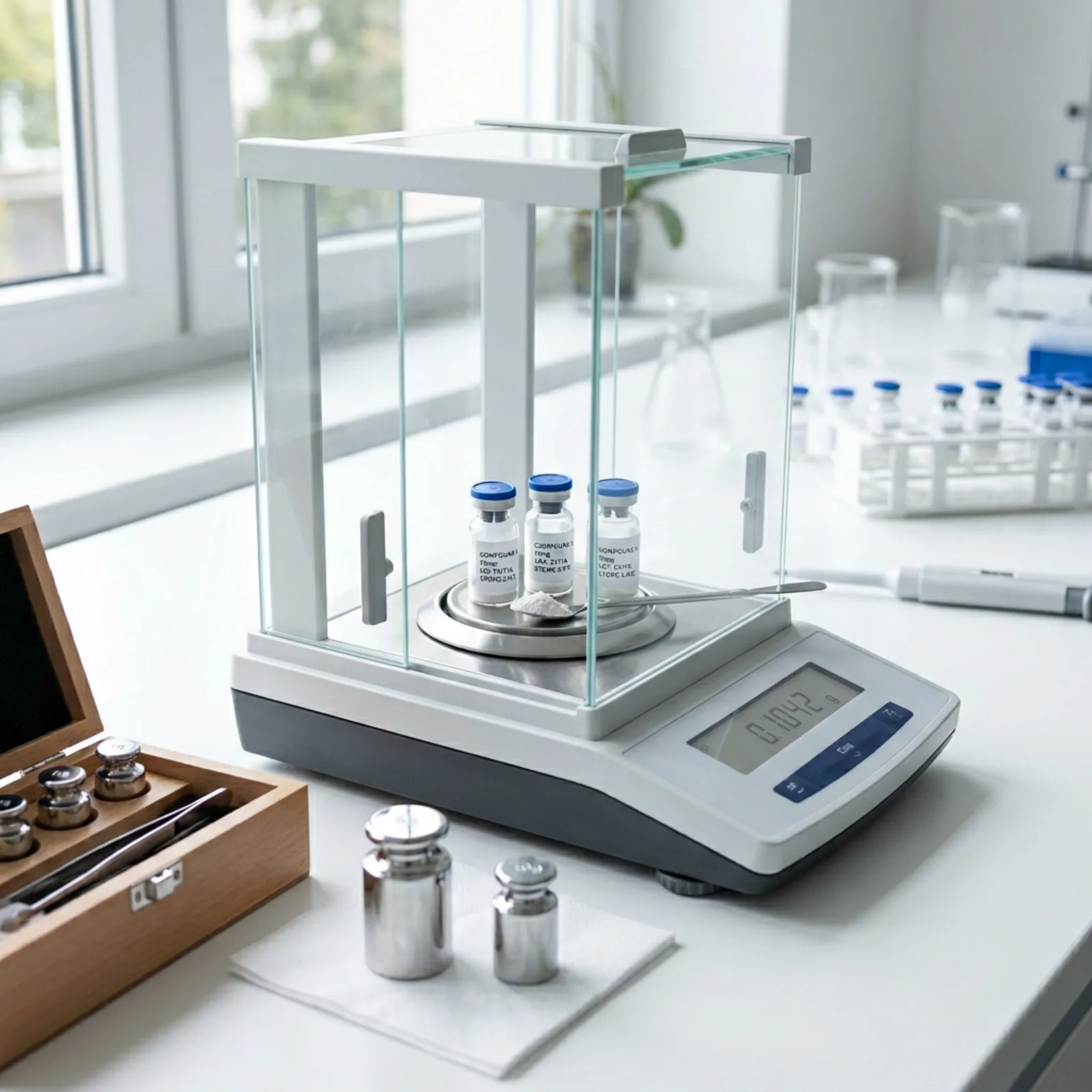
If you've spent any time in the growth hormone secretagogue space, you've encountered this question: CJC-1295 with DAC or without? Most sources either oversimplify the answer or skip the pharmacokinetic data entirely. Here's the thing — the difference isn't a matter of preference or opinion. There's actual human clinical data that makes the distinction very clear. The trick is knowing what you're optimizing for.
The DAC Technology: What It Actually Does
CJC-1295 is a synthetic analog of growth hormone-releasing hormone (GHRH), the hypothalamic peptide that tells your pituitary to release GH. Native GHRH has a half-life of roughly 7 minutes in circulation — degraded rapidly by dipeptidyl peptidase IV (DPP-IV) and other proteases. That's why researchers spent years trying to engineer more stable versions.
CJC-1295 (the DAC version) was developed by ConjuChem using their Drug Affinity Complex (DAC) technology. The DAC is a maleimide group that reacts with a free thiol on circulating albumin — forming a covalent bond after injection. Since human serum albumin has a half-life of approximately 19 days, whatever is covalently attached to it gets a substantial pharmacokinetic extension. At least 90% of CJC-1295 binds to albumin this way, with trace amounts found bound to fibrinogen and IgG.
The result: a half-life measured in days rather than minutes.
The Human Pharmacokinetic Data
Teichman and colleagues published the landmark clinical pharmacokinetics study in the Journal of Clinical Endocrinology & Metabolism in 2006. This is the paper that established the DAC version's half-life in humans — and the numbers are striking. After a single subcutaneous injection of CJC-1295, mean plasma GH concentrations increased 2- to 10-fold and remained elevated for 6 days or more. Mean plasma IGF-I concentrations increased 1.5- to 3-fold and remained above baseline for 9–11 days after a single dose.
The estimated half-life of CJC-1295 ranged from 5.8 to 8.1 days in the single-dose study, and from 5.4 to 9.2 days in the multiple-dose study. Maximum concentrations were reached within roughly 2 hours post-injection, then declined slowly over days. After multiple doses administered weekly, mean IGF-I levels remained above baseline for up to 28 days. No serious adverse reactions were reported.
That's weekly or biweekly dosing that maintains measurable GH and IGF-I elevation. From a pure convenience standpoint, it's remarkable.
CJC-1295 Without DAC (Mod GRF 1-29): The Pulsatility Question
The no-DAC version — commonly called Modified GRF 1-29 or Mod GRF — retains the four amino acid substitutions that make CJC-1295 resistant to DPP-IV degradation, but lacks the albumin-binding maleimide. Without that binding mechanism, its half-life collapses back toward something closer to 20–30 minutes. You're looking at a peptide that elevates GH briefly and then clears — mimicking the pulsatile dynamics of endogenous GHRH.
Here's why that matters. Ionescu and Frohman published a follow-up study in the Journal of Clinical Endocrinology & Metabolism (December 2006) specifically examining whether CJC-1295's long-acting nature disrupts the natural pulsatility of GH secretion. They used 20-minute blood sampling over a 12-hour overnight period in healthy men aged 20–40, comparing GH secretion profiles before and 1 week after injection of either 60 or 90 μg/kg of CJC-1295.
The finding was somewhat counterintuitive: GH pulsatility was preserved. The frequency and magnitude of GH secretory pulses were statistically unaltered. However, basal (trough) GH levels increased markedly — 7.5-fold (P < 0.0001) — contributing to an overall increase in mean GH levels of 46% and IGF-I levels of 45%. The pulses were still there; they were just riding on a higher baseline.
The question for researchers is whether that raised baseline is desirable. In the context of growth hormone deficiency, the Salvatori group at the University of Miami demonstrated in the American Journal of Physiology — Endocrinology and Metabolism (2006) that once-daily administration of CJC-1295 completely normalized growth in GHRHKO mice (animals with a genetic GHRH knockout). Once-every-48-hour dosing produced intermediate results, and 72-hour intervals showed further decline — suggesting that for persistent GH stimulation, frequency matters as much as the drug's inherent duration.
The GH Pulsatility Debate
GH is not secreted continuously in healthy physiology. It's released in distinct pulses — roughly 6–12 per day in young adults, with the largest pulses occurring shortly after sleep onset. These pulses aren't cosmetic; they're functionally important. Pulsatile GH drives hepatic IGF-1 production, muscle protein synthesis, and lipolysis in ways that continuous GH elevation does not fully replicate. Receptor sensitization and downstream signaling differ between pulsatile and continuous stimulation patterns.
The no-DAC version, with its short half-life, naturally generates a pulse when administered — GH rises acutely, then returns toward baseline as the peptide clears. This more closely mirrors endogenous dynamics. The DAC version's preservation of pulsatility (as Ionescu and Frohman showed) is somewhat reassuring, but the 7.5-fold increase in trough GH levels represents a fundamentally different secretion profile than what the body normally maintains.
Neither profile is inherently better — but they're different, and researchers need to choose based on their specific questions.
Practical Pharmacokinetic Comparison
| Parameter | CJC-1295 (with DAC) | Mod GRF / No-DAC |
|---|---|---|
| Half-life | 5.8–8.1 days | ~20–30 minutes |
| GH elevation duration (single dose) | 6+ days | ~2–4 hours |
| IGF-I elevation duration | 9–11 days (single dose), 28 days (multiple) | Hours to 1 day |
| Dosing frequency | Weekly or biweekly | Daily (often with GHRP) |
| GH release pattern | Elevated trough with preserved pulses | Acute pulse, returns to baseline |
| Albumin binding mechanism | Covalent (DAC maleimide–thiol bond) | None |
Which Version for Which Research Goal?
The DAC version is most relevant for research questions requiring sustained GH and IGF-I elevation with minimal injection frequency. If you're studying long-term body composition changes, chronic GH deficiency models, or testing effects that require weeks of elevated IGF-I, the 5.8–8.1 day half-life makes experimental logistics substantially simpler. Teichman's data — showing measurable drug concentrations 10–14 days after a single injection at the higher doses — means weekly administration could theoretically maintain near-constant pharmacological action.
The no-DAC version is better matched to research questions where pulsatility matters. Studying GH receptor dynamics, short-term anabolic signaling, or designing protocols that pair GHRH stimulation with a GHRP to amplify specific pulses — that's the domain of Mod GRF. Because it clears quickly, it also allows more experimental control: you can time the GH pulse precisely relative to other measurements or interventions.
For research purposes, 22EXO carries CJC-1295 with DAC (5mg) and CJC-1295 without DAC / Mod GRF (5mg) as separate compounds. For researchers interested in the GHRH+GHRP combination approach, Ipamorelin (5mg) is available individually, and pre-blended options including CJC-1295 No-DAC + Ipamorelin (5mg) and CJC-1295 No-DAC + Ipamorelin (10mg) are also on offer.
The Safety Picture
Both versions of CJC-1295 have relatively clean safety profiles in published research. Teichman's trial reported no serious adverse reactions. The most commonly noted side effects are mild injection site reactions and occasional water retention at higher doses — consistent with GH-related fluid shifts. No serious safety signals emerged even at 250 μg/kg in the single-dose pharmacokinetic study.
That said, sustained GH elevation raises questions that haven't been fully answered in long-term studies. Continuous IGF-I elevation is associated with potential proliferative risks, and this isn't a theoretical concern — it's a real consideration for any extended research protocol.
One Nuance Worth Addressing
The nomenclature here is genuinely confusing in the market. Mod GRF 1-29 is a truncated, modified GHRH analog with a short half-life. DAC CJC-1295 is the albumin-binding long-acting version. They're not interchangeable, and dosing protocols designed for one won't necessarily translate to the other.
When evaluating any CJC-1295 product for research, the COA and sequence specification should clarify whether DAC technology is present. If it's not documented, assume the no-DAC version.
Frequently Asked Questions
What is the half-life difference between CJC-1295 with DAC and without DAC?
According to Teichman et al. (J Clin Endocrinol Metab, 2006), <a href="/product/cjc-1295-no-dac-mod-grf-5mg">CJC-1295</a> with DAC has an estimated half-life of 5.8–8.1 days in human subjects. The no-DAC version (<a href="/product/cjc-1295-no-dac-mod-grf-5mg">Mod GRF</a> 1-29) lacks the albumin-binding maleimide and clears in approximately 20–30 minutes, producing a short pulsatile GH release rather than sustained elevation.
Does CJC-1295 with DAC disrupt natural GH pulsatility?
Ionescu and Frohman (J Clin Endocrinol Metab, December 2006) addressed this directly using 20-minute overnight blood sampling in healthy men. They found GH pulse frequency and magnitude were statistically unaltered, but trough (baseline) GH levels increased 7.5-fold. So pulsatility is technically preserved, but the background GH level is substantially elevated — a different secretion profile than normal physiology.
How long does IGF-1 stay elevated after a single dose of CJC-1295 DAC?
In Teichman's clinical trial, a single subcutaneous injection elevated IGF-I concentrations 1.5- to 3-fold for 9–11 days. After multiple doses administered weekly, IGF-I levels remained above baseline for up to 28 days. Drug concentrations were measurable 10–14 days after a single injection.
Which version of CJC-1295 is better for combining with Ipamorelin?
The no-DAC version (<a href="/product/cjc-1295-no-dac-mod-grf-5mg">Mod GRF</a> 1-29) is more commonly paired with <a href="/product/ipamorelin-5mg">Ipamorelin</a> for pulse-based protocols. Because Mod GRF clears quickly, it creates a defined GH pulse that Ipamorelin simultaneously amplifies via the GHRP receptor — producing a synergistic spike that mimics natural pulsatile GH dynamics. The DAC version maintains more continuous stimulation, which serves different research purposes.
Is CJC-1295 the same as Sermorelin?
No. <a href="/product/sermorelin-5mg">Sermorelin</a> is GHRH(1-29), a truncated form of native GHRH with a half-life similar to the natural peptide (roughly 10–12 minutes). <a href="/product/cjc-1295-no-dac-mod-grf-5mg">CJC-1295</a> no-DAC is a modified version of GHRH(1-29) with four amino acid substitutions that confer DPP-IV resistance, extending its half-life to ~30 minutes. CJC-1295 with DAC adds the albumin-binding mechanism for multi-day duration. These are three distinct compounds.