NAD+, NMN, NR: What's Actually Different When You Pick a Precursor
All three names show up on supplement bottles and in research papers, often interchangeably. They are not interchangeable. Here is what the bioavailability and tissue distribution data say about which one ends up where.
One Coenzyme, Three Names
NAD+ is everywhere in cell biology. It accepts electrons in glycolysis and the TCA cycle. It donates ADP-ribose units to the sirtuins, the PARPs, and the CD38 family of enzymes. It's the substrate that lets a cell know whether it's in surplus or deficit, whether DNA repair is needed, whether to extend or shorten cell lifespan. It is, by some measures, the most heavily used small molecule in metabolism.
The amount of NAD+ in your cells declines with age. This isn't disputed. Multiple labs have documented it across multiple tissues. What is disputed is what to do about it. The proposed solutions all involve flooding the system with precursors, but the precursors are not equivalent, and the literature on which one is best is messier than the supplement marketing suggests.
The Salvage Pathway in Five Sentences
Cells make NAD+ from scratch via the de novo pathway, starting from tryptophan. Most NAD+ in adult cells comes instead from the salvage pathway, which recycles nicotinamide. Nicotinamide is converted to NMN by the enzyme NAMPT. NMN is converted to NAD+ by the enzyme NMNAT. NR enters the system one step earlier, getting phosphorylated to NMN by NRK1 or NRK2.
So the conversion order, going from precursor to product, is: NR → NMN → NAD+. NAD+ is the destination. NMN and NR are different distances upstream. In principle, giving any of them should raise NAD+ levels. In practice, where they raise NAD+ levels and how much depends entirely on transporter biology.
Brenner, Imai, Sinclair
Three labs have driven most of the precursor discussion. Charles Brenner at Dartmouth (now City of Hope) has been the most aggressive proponent of NR. Shin-Ichiro Imai at Washington University in St. Louis pioneered NMN. David Sinclair at Harvard has been a high-profile advocate for both, particularly in the context of sirtuin biology.
Brenner identified NR as a vitamin precursor in a 2004 Cell paper (Bieganowski and Brenner) that established the biochemistry. NR was already known as a minor metabolite, but its role as a usable NAD+ precursor in mammals was new. The subsequent decade of work focused on the NRK1/NRK2 enzymes, NR's pharmacokinetics in humans, and tolerability data. Trammell et al.'s Nature Communications paper from 2016 remains the cleanest pharmacokinetic study of oral NR dosing in humans, showing reliable blood NAD+ elevation at 100, 300, and 1000 mg doses with no notable adverse signals.
Imai's group made NMN their organism. Mills et al. in Cell Metabolism (2016) ran the long-term mouse study that drove most of the public excitement about NMN. Twelve months of NMN in drinking water, started at 5 months of age in mice, mitigated age-associated declines in body weight regulation, insulin sensitivity, mitochondrial function, and exercise capacity. The paper was influential. It's also been reasonably reproduced in independent rodent work.
Sinclair's lab has worked on both, with a particular focus on sirtuin activation and the resveratrol-NAD+-sirtuin loop. The Sinclair group's 2013 Cell paper (Gomes et al.) on age-related mitochondrial decline and NAD+ restoration is a foundational piece of the framework. Their subsequent work on NMN extended the picture into vascular biology and exercise capacity.
The Transporter Question
The biggest mechanistic argument in the field is whether NMN can enter cells directly or whether it has to be cleaved to NR first. Brenner argued for years that NMN gets dephosphorylated extracellularly by CD73, taken up as NR, then re-phosphorylated to NMN inside the cell. The implication: orally administered NMN is functionally equivalent to NR, with the extra dephosphorylation step adding nothing useful.
The Imai group disagreed. In a 2019 Nature Metabolism paper, Grozio, Mills, Yoshida and colleagues reported that the SLC12A8 transporter directly imports NMN, particularly in the small intestine, and that the response was rapid enough to argue against a CD73-mediated detour. The paper has been controversial. Some labs have been unable to replicate the SLC12A8 finding under the conditions reported. A 2021 retraction of a related earlier Imai paper added to the cloud over the area. The current best summary is probably that some direct NMN uptake exists via SLC12A8 in some tissues, and some uptake occurs via the NR detour, and which dominates likely depends on the tissue.
What This Means for Research Design
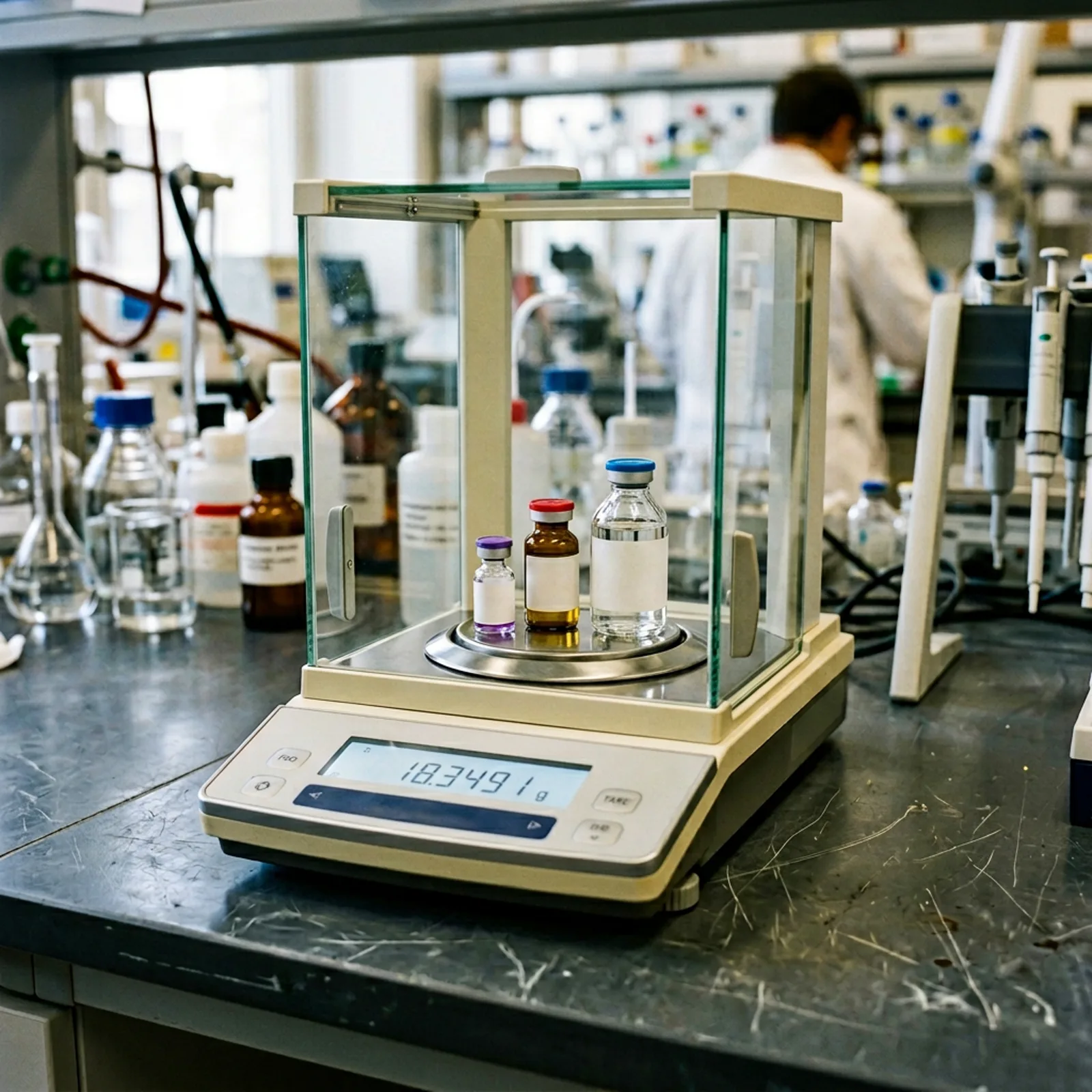
For most cell-culture work, NAD+ itself can be added to the medium and produces measurable effects within hours, particularly on sirtuin and PARP activity. Direct cellular uptake of intact NAD+ is real in cultured cells, even if it's contested in vivo. The 500 mg vials of NAD+ commonly sold for research applications are sized for this kind of work — single-experiment quantities at concentrations sufficient for cell exposures across multiple plates.
For animal work, the choice between NMN and NR mostly tracks to which lab's published protocol the researcher is following. NR has cleaner pharmacokinetic data in mice and humans. NMN has the larger long-term aging-mitigation paper trail. Both elevate blood and tissue NAD+ when administered orally at appropriate doses, and the magnitude of elevation in most reported studies is comparable between matched doses.
For the underlying question of "does raising NAD+ improve healthspan in humans" — that's the trial that hasn't been done at the scale needed to answer it. Multiple human trials of NR are ongoing, with endpoints around insulin sensitivity, vascular function, and various age-related markers. NMN human trials have been smaller and shorter so far. The signal is suggestive across the board. The definitive answer, if one exists, is years away.
Storage and Handling
NAD+, NMN, and NR are all light-sensitive and degrade rapidly when exposed to humidity. Lyophilized forms stored at −20°C are stable for months to years; reconstituted aqueous solutions degrade within days at refrigerator temperatures and within hours at room temperature. Any research-grade product should ship lyophilized with a documented stability window. Solutions for cell-culture experiments should be made fresh on the day of use, particularly for assays sensitive to redox state.
The literature on NAD+ as a research compound has accumulated faster than the literature on its use as a human therapeutic. The mechanistic story is solid. The translational story is in progress. Both are worth following.
Sources: Bieganowski and Brenner, Cell, 2004; Gomes et al., Cell, 2013; Mills et al., Cell Metabolism, 2016; Trammell et al., Nature Communications, 2016; Grozio et al., Nature Metabolism, 2019; Yoshino et al., Cell Metabolism, 2018; Verdin, Science, 2015.
Frequently Asked Questions
Are NAD+, NMN, and NR the same thing in different forms?
No, but they're closely related. NAD+ is the working coenzyme. NMN (nicotinamide mononucleotide) is one chemical step away from NAD+. NR (nicotinamide riboside) is one step further upstream from NMN. All three feed into the same pathway, but they enter the cell through different mechanisms and convert to NAD+ at different rates and in different tissues.
Why give NMN or NR instead of NAD+ directly?
The orthodox view, articulated by Charles Brenner and others, is that NAD+ doesn't cross cell membranes intact in meaningful quantities — it gets cleaved at the cell surface to nicotinamide and other fragments before being reassembled inside the cell. NMN and NR are smaller and have specific transporters (Slc12a8 for NMN; ENT/CNT family for NR). Whether NAD+ itself can be taken up directly is contested in the recent literature, with some 2019-2022 papers arguing for direct uptake under specific conditions.
What did the Mills/Imai 2016 NMN paper show?
Mills, Yoshida, Stein, and colleagues in Shin-Ichiro Imai's lab published in Cell Metabolism (2016) a 12-month NMN administration study in mice. Old mice given NMN in drinking water showed mitigated age-associated physiological decline across multiple measures including insulin sensitivity, mitochondrial function, gene expression, and exercise capacity. The paper was influential and is one of the most-cited NMN longevity references.
What did Brenner's lab show about NR?
Charles Brenner identified NR as a vitamin precursor in 2004 (Bieganowski and Brenner, Cell). Subsequent work established NR's pharmacokinetics in humans (Trammell et al., Nature Communications 2016) and showed clean tolerability and reliable elevation of blood NAD+ levels with oral NR dosing. NR is the precursor with the largest body of human pharmacokinetic and safety data.
Does the 2019 Slc12a8 paper resolve how NMN gets into cells?
Grozio, Mills, Yoshida, Imai et al. in Nature Metabolism (2019) reported Slc12a8 as a direct NMN transporter, particularly important in the small intestine. The paper attracted some critique on methodology and replication has been mixed. The 2021 retraction of an earlier related Imai paper added to the controversy. The current state is that some NMN uptake is likely direct via Slc12a8 in tissues where it's expressed, and some occurs via extracellular conversion to NR followed by NR uptake.